Came from a prosperous merchant family
The future artist was born in 1861 into a prosperous Moscow family. Korovin's grandfather, Mikhail Emelyanovich, was a first-guild merchant who ran mail transport with coachmen, earning the nickname 'the Moscow king of coachmen'. Alexey Korovin, the artist's father, was an educated and gifted man from whom his sons Konstantin and Sergey inherited their artistic talent.

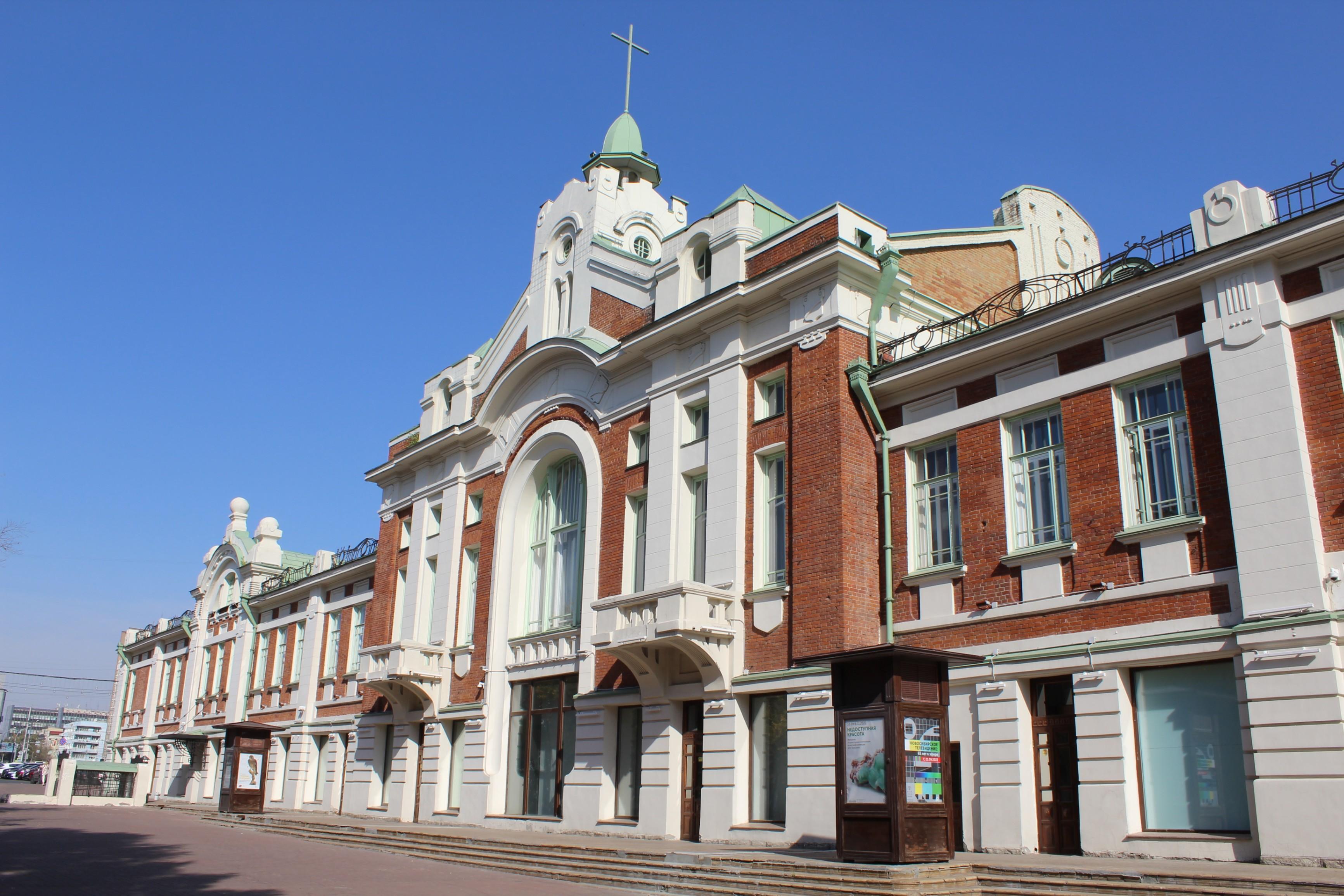
Moscow, Tovarishchesky Lane, 24, bldg. 4. The wing of the house where Konstantin Korovin was born. Photo: Oksana Aleshina / Lori Photo Bank
His family became bankrupt and his father committed suicide
By the end of the 19th century many railways had been built in Russia and steam locomotives replaced horse-drawn transport. The family business collapsed, the family had to sell their merchant house in Moscow and move to the Moscow suburb of Mytishchi. It was there that Konstantin Korovin's acquaintance with art began. His father, Alexey Korovin, took a position as a factory accountant but could not cope with severe depression over the loss of status and took his own life.

Konstantin Korovin
Korovin's elder brother was also a painter
The family's life was difficult, but the boys' mother, an educated noblewoman from the distinguished Volkov family, Apollinariya Volkova, helped her sons get back on their feet and obtain an education. Konstantin's elder brother, Sergey, entered the Moscow School of Painting, Sculpture and Architecture and later became a genre painter, continuing the realist traditions of the Peredvizhniki. Konstantin followed him into the school. Later Korovin would remark about his elder brother's work: 'Seryozha is more talented than I am, but how sad his muse is!'

Sergey Korovin. Self-portrait
Studied under Alexey Savrasov and Vasily Polenov
At thirteen Konstantin Korovin entered the Moscow School of Painting in the architecture department, but studied there for only one year before transferring to the painting department under Alexey Savrasov. Konstantin regarded Savrasov as his principal teacher and mentor, but Savrasov was soon dismissed for drunkenness. After that Konstantin moved to St. Petersburg and enrolled in the Imperial Academy of Arts, but left after three months, disappointed with the teaching methods. Upon returning to Moscow, Korovin re-entered his alma mater, where the position held by Savrasov had been taken by Vasily Polenov. Polenov became Korovin's new teacher and introduced him to the patron Savva Mamontov, thanks to whom the young artist went to Abramtsevo — a center of Moscow's cultural life.

Savva Mamontov plays the piano for his guests (left to right): Ilya Repin, Vasily Surikov, Konstantin Korovin, Valentin Serov and Mark Antokolsky. The photograph was taken in 1892 by M. Shabelnikov in Mamontov's study in the house on Sadovaya-Spasskaya
He was the best friend of the artist Valentin Serov
Valentin Serov and Konstantin Korovin met and became friends in Abramtsevo. It was hard to imagine two people more different in temperament: Serov, prone to depression, silent and ascetic, and Korovin, a life-loving, bright extrovert and wit. It seemed the law of attraction of opposites was at work. Yet the artists had more in common than at first glance: publicly Korovin kept the reputation of a frivolous bon vivant, but in reality he was a deep and thoughtful person who had endured many hardships. He could entrust his secrets and sorrows only to Serov. Savva Mamontov called the inseparable pair 'Serovin and Korov.'

V.A. Serov. Artist K.A. Korovin on the Riverbank. 1905.
Considered the founder of Russian Impressionism
In 1887 Korovin painted 'Portrait of a Chorister' and the art world began to talk about him. The work impressed Ilya Repin himself, and Savva Mamontov thought it had been painted by a Spanish artist — so different was the manner from the realist technique of the Peredvizhniki. In artistic circles the work was criticized, but Korovin did not abandon his style and continued to create works characterized by broad brushstrokes and a riot of color. Notably, Korovin arrived at Impressionism independently through artistic intuition, long before his trips to France. Besides painting, Korovin also distinguished himself in theatrical art, creating costume and set designs for operas and stage productions.

K.A. Korovin. Portrait of a Chorister. 1887. The painting is dated 1883, but technical and technological research revealed that the picture was painted alla prima, a technique Korovin began using in the late 1880s.
Traveled a lot
Korovin visited Paris repeatedly, where he painted famous canvases such as 'Paris. Boulevard des Capucines', 'Parisian Café', and 'After the Rain'. It was in Paris that Korovin met the Impressionists, who amazed him with their technique and color handling. Together with Serov, Korovin also traveled twice to the north, to Sweden and Norway. There he painted notable landscapes: 'Hammerfest. Northern Lights', 'Harbor in Norway', 'Murman Coast', 'The Stream of Saint Tryphon in Pechenga. Lapland', and 'Arkhangelsk Port on the Dvina'.

K.A. Korovin. Paris. Boulevard des Capucines. 1911.
He was a talented teacher and possessed literary talent
From 1901 Korovin taught alongside Serov at the Moscow School of Painting, Sculpture and Architecture. He knew how to support his students in moments of doubt and failure, promoted creative freedom and encouraged the search for an individual style. Among Korovin's students were well-known and diverse artists such as Saryan, Yuon, Fedorovsky, Gerasimov, Kuprin, Mashkov, Krymov, Nikiforov, Turzhansky, Falk and others. Korovin also had an exceptional gift as a storyteller and writer and wrote more than 400 stories.
He loved the Black Sea region and lived for long periods in Gurzuf
Korovin loved the Black Sea and traveled extensively along the coast, making sketches and quick landscapes. In Gurzuf he built a dacha to his own design in the constructivist style and lived there continuously until the revolution. At the villa 'Salambo' — as the dacha was called — his friends and colleagues, notable figures of the intelligentsia of the time, were frequent long-term guests: Rachmaninoff, Kuprin, Chaliapin, Repin, Mamin-Sibiryak, Surikov, and Gorky. Today the restored villa houses the Konstantin Korovin House-Museum.

K.A. Korovin. Crimea. Gurzuf. 1917.

K.A. Korovin. Gurzuf. 1914.

K.A. Korovin. In the Garden. Gurzuf. 1914.

Villa Salambo in Gurzuf. Photo: Wikimedia Commons

Entrance to the Korovin Museum. Photo: cdn-crimea-news
Emigrated to France and lived there until his death
In 1922 Korovin followed the advice of Anatoly Lunacharsky and emigrated to France. In France the artist completed his memoirs 'My Life', which were first published only in 1970. In 1939, at the age of 77, the artist died of a heart attack on a street in Paris. He was buried at the Biyankur cemetery. Later, in 1950, the remains of Korovin and his wife were transferred to the Orthodox cemetery in Sainte-Geneviève-des-Bois.