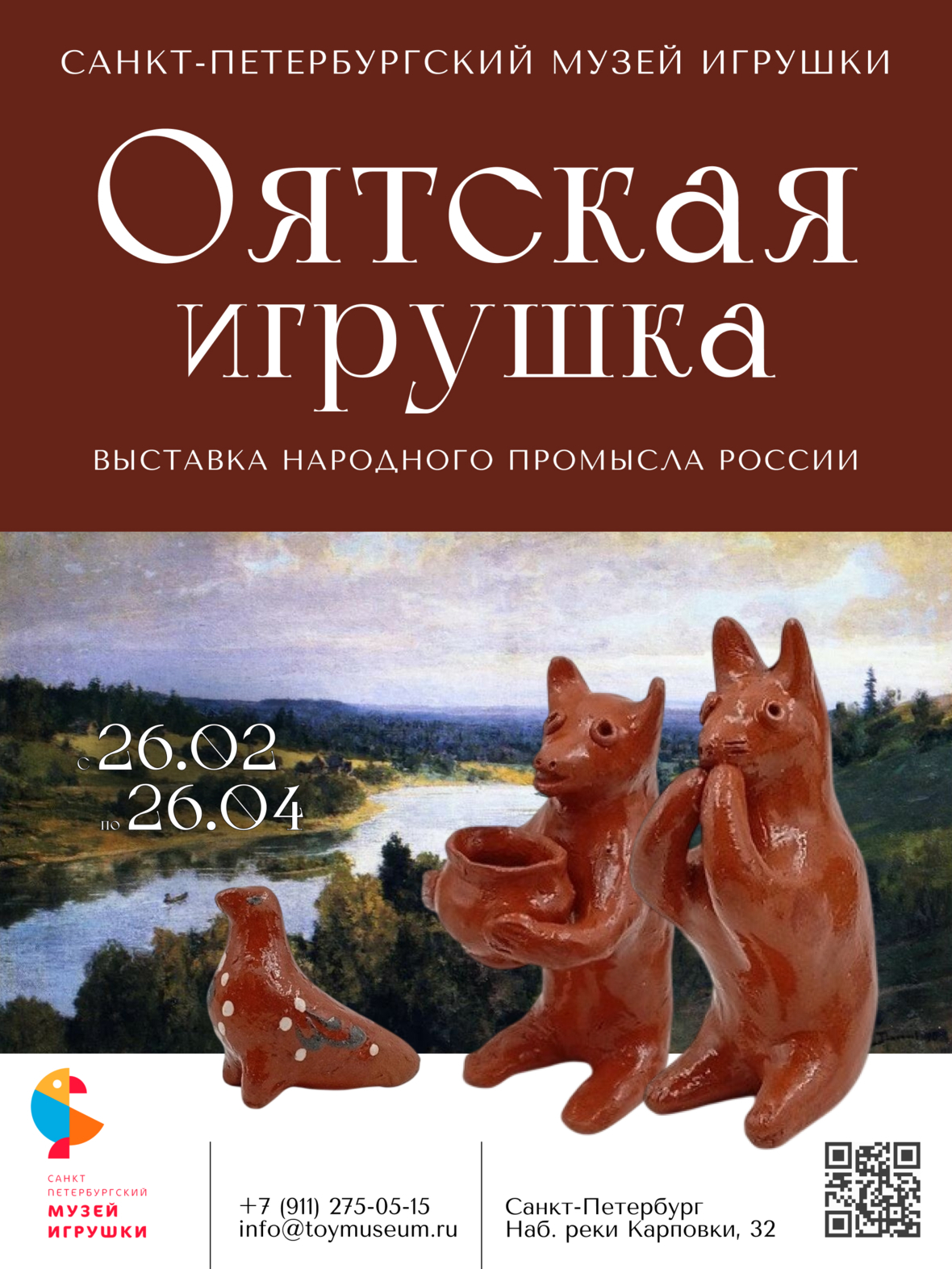
The village of Alekhovshchina in the Lodeynopolsky District of Leningrad Oblast, predominantly Veps. The craft is named after the Oyat River. Known since the 18th century. The toy is made from red clay, painted with engobe (colored clays), treated with copper sulfate, and glazed.
Originally, the region was famous for its ceramics, and, as in many areas, toys were made from leftover clay for children’s amusement. Later the toys began to be brought to Saint Petersburg, and the range of motifs was then supplemented by the motif that has become traditional today — the lion, because one of the symbols and guardians of our city is the lion.
The exhibition features more than 100 works by the artist Lyudmila Andreevna Ivanova.
The origin of the craft in the Lodeynopolsky uyezd of Olonets Governorate and the Tikhvin uyezd of Novgorod Governorate can be dated to the second half of the 19th century. In the Veps and Russian villages located along the middle reaches of the Oyat River, where the population engaged in making various clay tableware, toy figurines and whistles were initially produced in small quantities, since they were originally intended for sale on the local market.
Both adults and children were involved in making the toys. The material for the ceramic products was red and yellow clay that peasants extracted from the banks of the Oyat River. Although the local craft did not experience influence from other well-known ceramic centers, it initially formed the same typological set of toys as in other regions. In terms of product types, the Oyat toy is closest to the early Kargopol toy.
The range of products made by Oyat potters included whistles in the shape of domestic and wild animals, riders, 'lady' toys and narrative scenes.
The exhibition runs at the Toy Museum from 26 February to 26 April 2026.
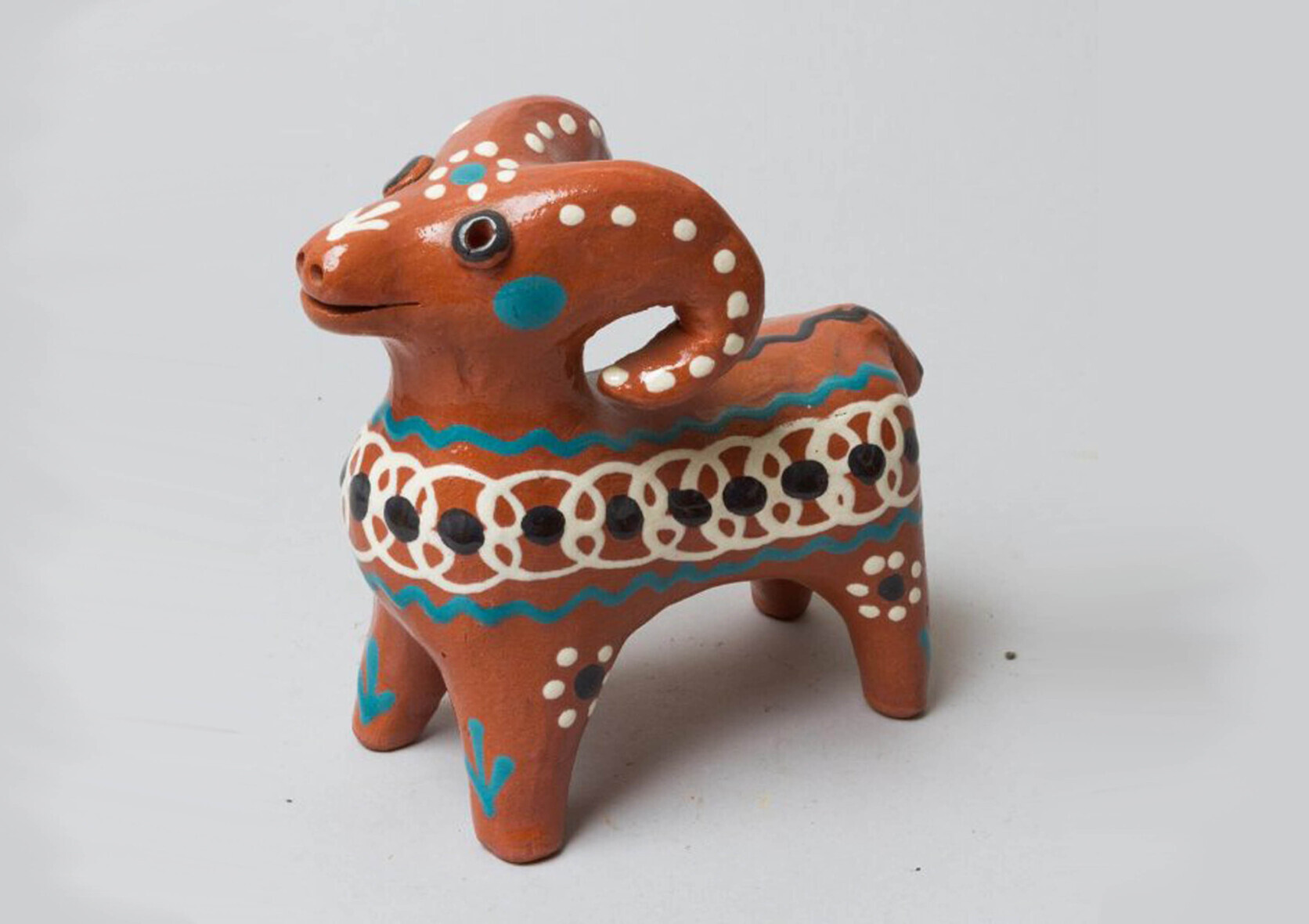
Oyat Toy. Little Goat.
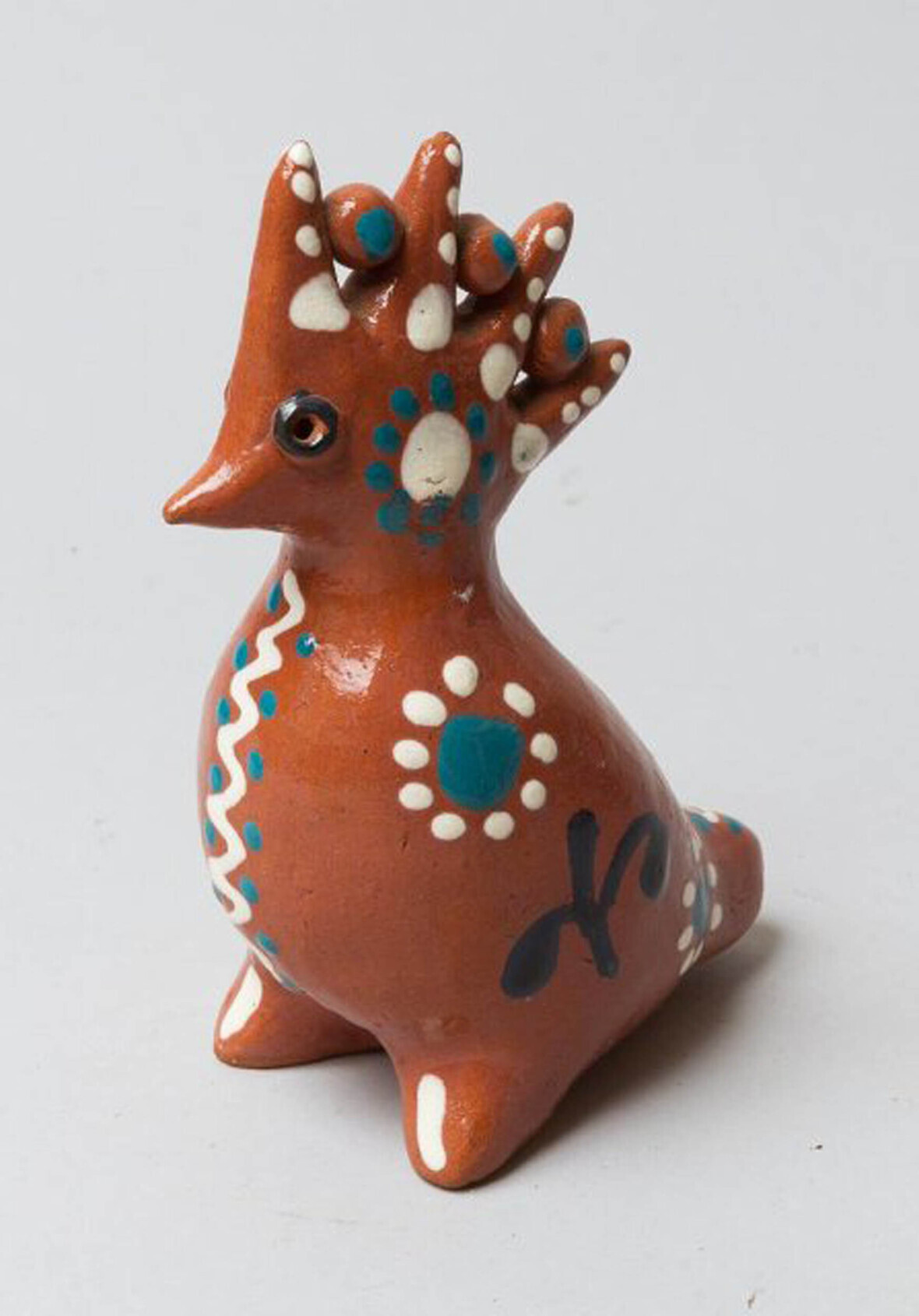
Oyat Toy. Bird.
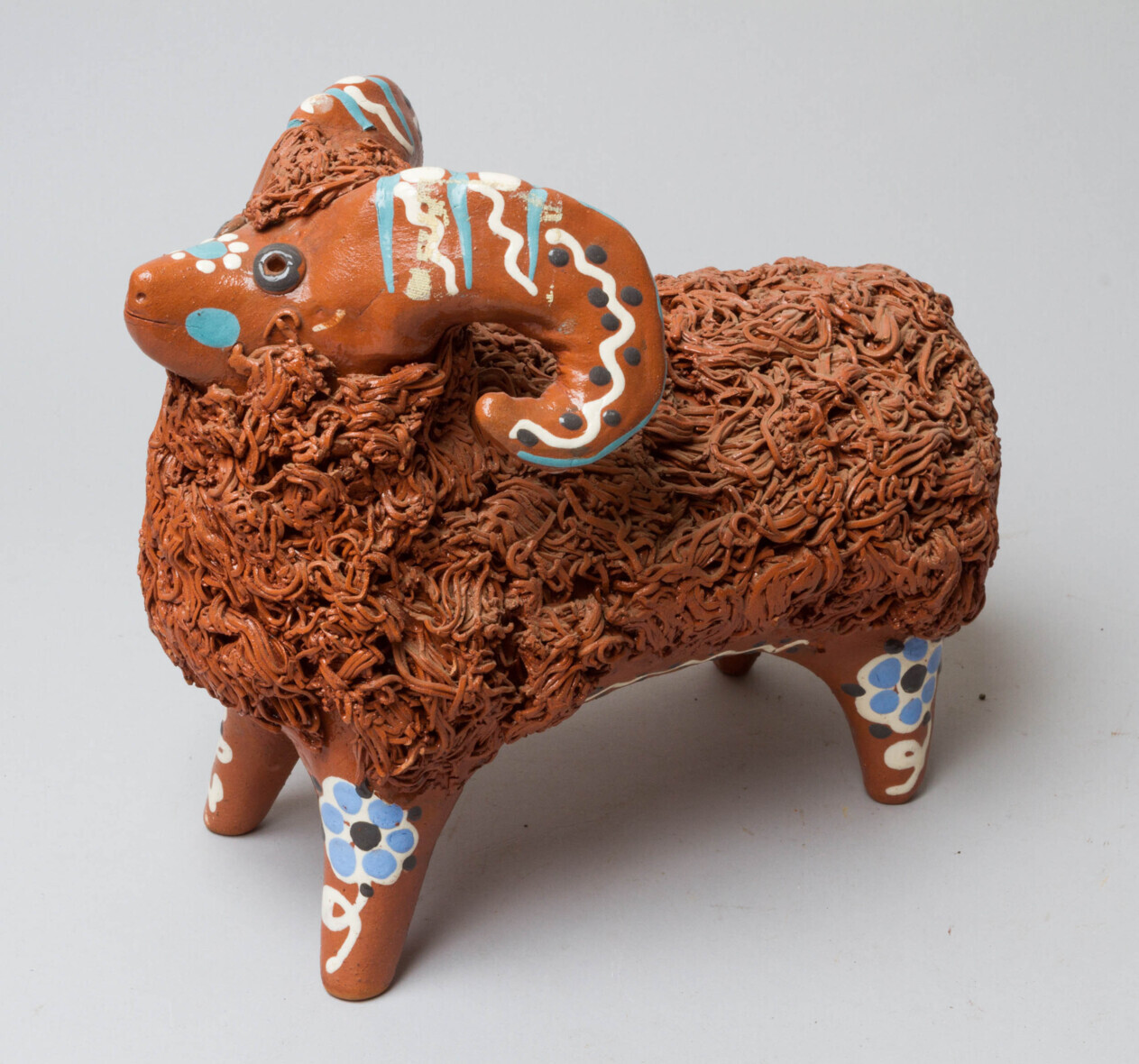
Oyat Toy. Ram.
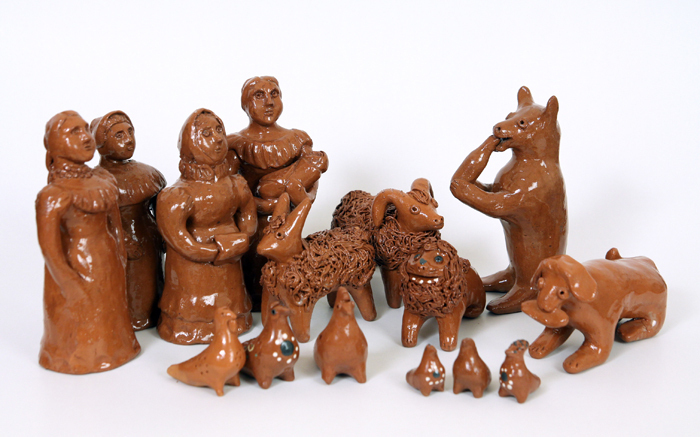
Oyat toys