The world of art is governed by surprising and complex rules. It often seems that the future of artworks depends on chance: on circumstances, coincidences, and the artist’s ability to be in the right place at the right time. History knows many examples of creators who found success during their lifetime and those who gained recognition posthumously, centuries after their death. We have compiled the Top 5 most expensive paintings ever sold by Russian artists. The success of these works of art is as unpredictable as the fate of their creators.
5. Nikolai Feshin – 'Little Cowboy' (1940). Price ~ $11M. Year of sale 2010. MacDougall's auction
Nikolai Feshin was one of Ilya Repin’s best pupils, working at the intersection of realism, impressionism, and Art Nouveau. His works literally "breathe" life and are painted in an emotional, temperamental manner. After the Revolution the twists of fate brought Feshin to America, where he became a nationally recognized painter. In the Soviet Union his name was practically forgotten.
The work 'Little Cowboy' was sold in 2010 to an unknown Russian collector and became the most expensive lot of Russian art ever sold by MacDougall’s auction house. Thanks to this sale the artist's name circulated around the world again and renewed interest in his work not only abroad but also in Russia.
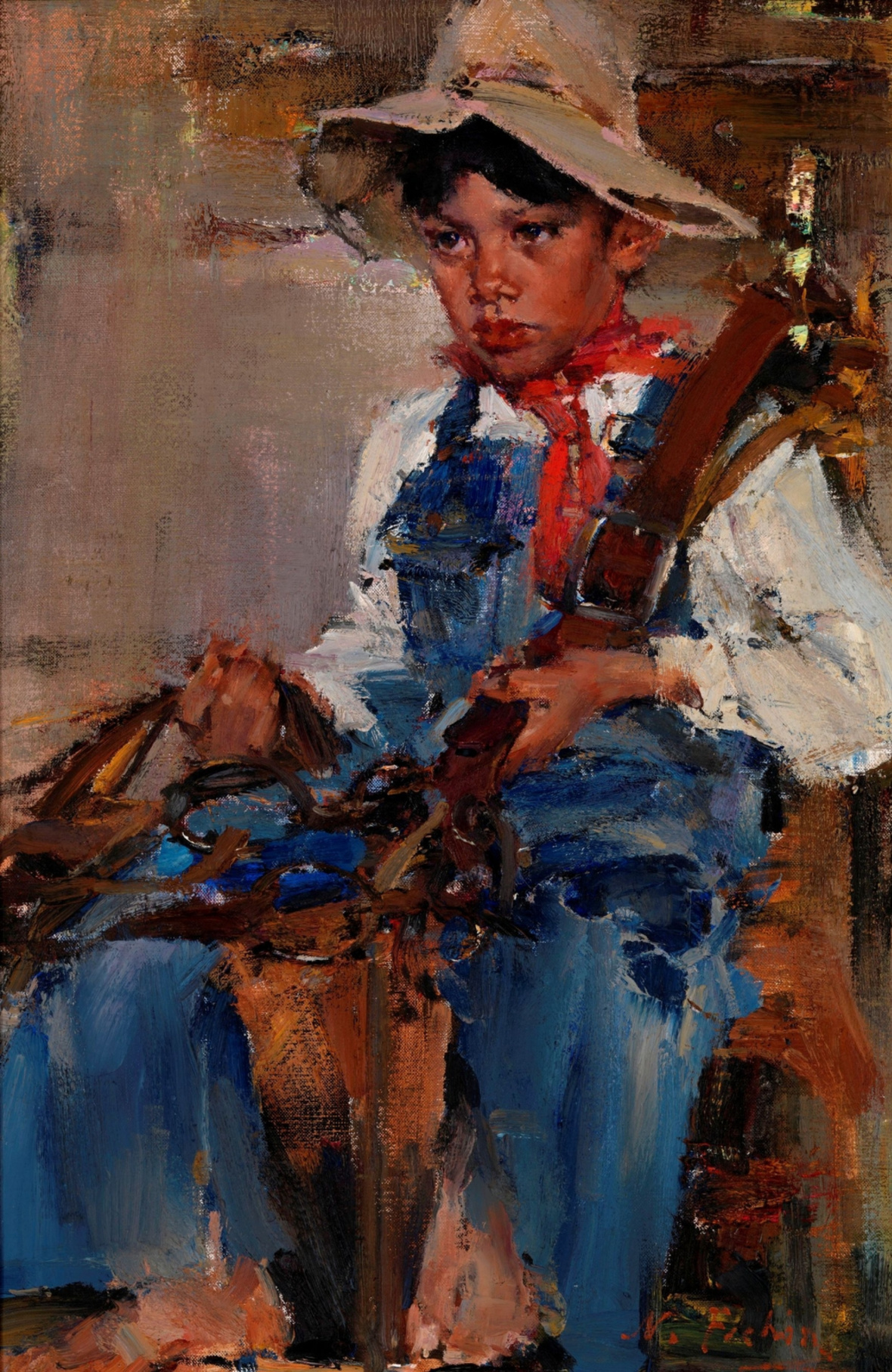
Nikolai Feshin – 'Little Cowboy' (1940)
4. Nicholas Roerich – 'Madonna Laboris' (1931). Price $13.5M. Year of sale 2013. Bonhams auction
Nicholas Roerich was a well-known Russian painter, philosopher, traveler, public figure, and mystic, fascinated by the ideas of cosmism. At different periods he drew inspiration from the culture of Ancient Rus and the East. Maxim Gorky called Roerich a "great intuitionalist" for his gift of premonition and the special energy of his paintings. The painting 'Madonna Laboris' is a vivid example of the artist's figurative and mystical language. The subject depicts the Mother of God who, using her scarf and secretly from the Apostle Peter, leads human souls into Paradise.
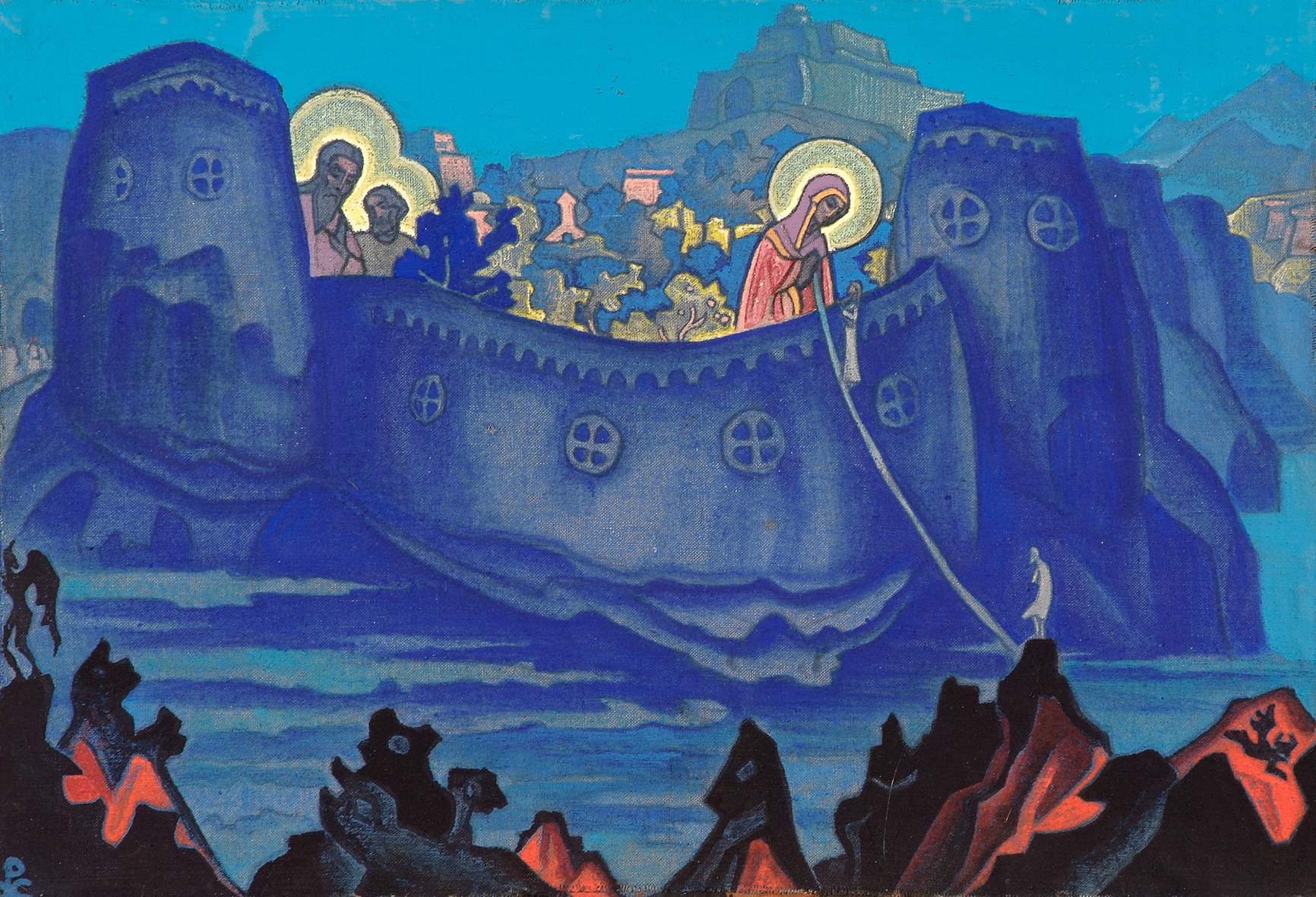
Nicholas Roerich – 'Madonna Laboris' (1931)
3. Marc Chagall – 'Jubilee' (1923). Price $16.3M. Year of sale – 1990. Sotheby's auction
Marc Chagall was a leading figure of the avant-garde painting movement who achieved worldwide fame during his lifetime. His art is imbued with delicate lyricism, a gentle nostalgia, and hope. His wife Bella was the main muse and heroine of his love paintings.
The painting 'Jubilee' is one of the finest examples of Chagall’s lyrical painting, reflecting all the characteristic features of his work. On the canvas a loving couple, ignoring the laws of physics, floats above the world set against the backdrop of bourgeois life. Since its sale in 1990 the painting has not been brought to auction again. An interesting fact: the Museum of Modern Art in New York exhibits a similar painting titled 'The Birthday', painted eight years earlier — in 1915.

Marc Chagall – 'Jubilee' (1923)
2. Wassily Kandinsky – 'Study for Improvisation No. 8' (1909). Price ~ $23M. Year of sale – 2012. Christie's auction
Wassily Kandinsky was one of the prominent founders of abstract painting. His art is characterized by nonobjectivity, expression, musical rhythm, and cosmological forms. Kandinsky painted this work in Germany as part of his 'Improvisations' series. The artistic value of the canvas lies in its revolutionary step from realism to abstraction, and the subject still provokes debate among art historians. Experts ask who is depicted with a sword in hand — Saint George or the sons of Prince Vladimir, Boris and Gleb? Are the background forms minarets or Orthodox churches? Some researchers believe Kandinsky did not make direct references, as he had a photographic memory and liked to mix various images in his paintings.
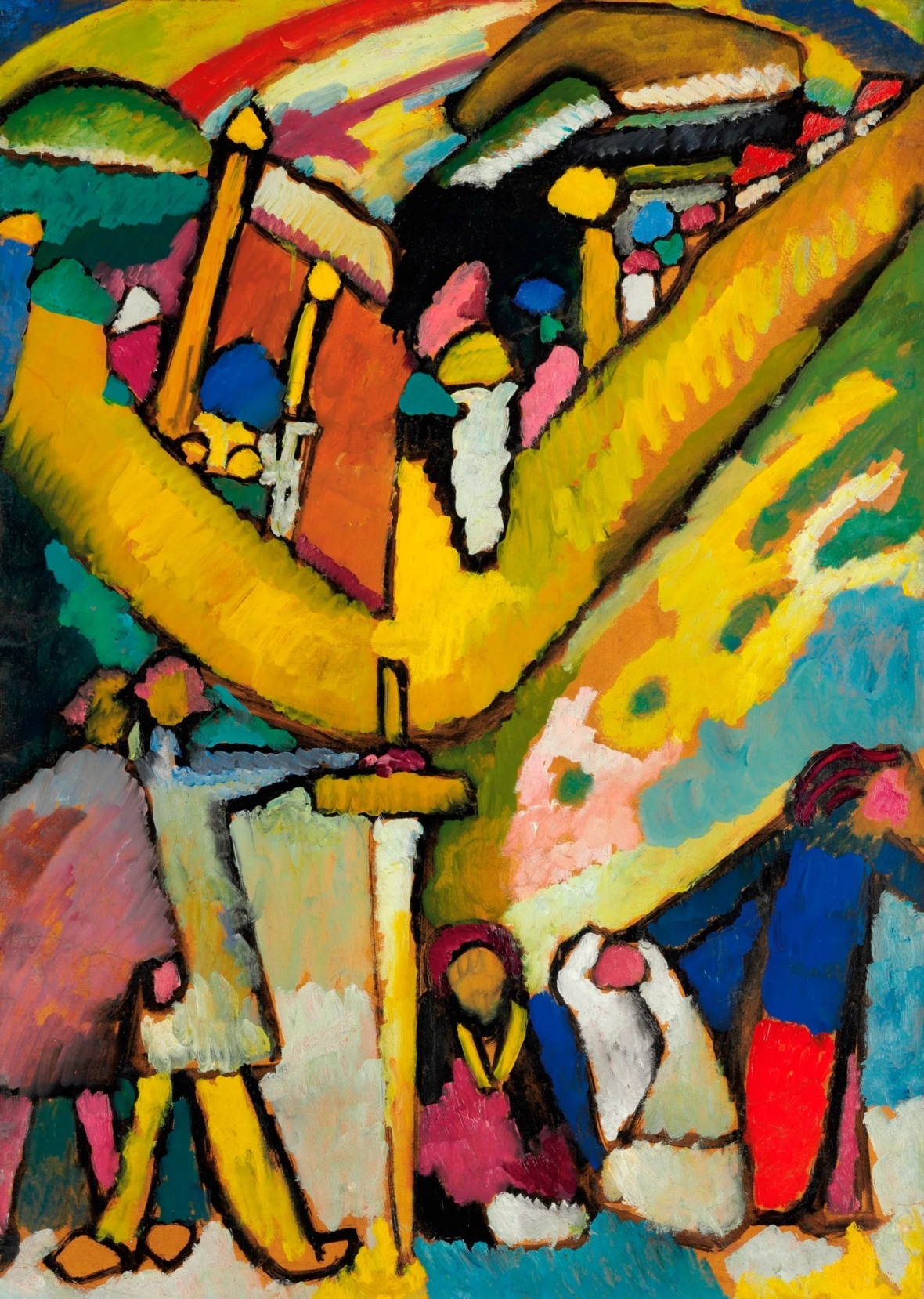
Wassily Kandinsky – 'Study for Improvisation No. 8' (1909)
1. Kazimir Malevich – 'Suprematist Composition' (1916). Price $85M. Year of sale – 2018. Christie's auction
Kazimir Malevich is considered the founder of Suprematism — the first and only Russian art movement to receive worldwide recognition. In the 1919–1920s the painting 'Suprematist Composition' was exhibited in Moscow, and in 1927 it was shown at exhibitions in Warsaw and Berlin. After Malevich’s urgent departure from Germany to the Soviet Union that same year, the painting, like other works by the artist, was placed in the care of the German architect Hugo Haring. When Nazi Germany began destroying so-called "degenerate art," Haring miraculously managed to take 'Suprematist Composition' and other Malevich works out of the country.
In 1958 Haring’s heirs sold the painting to the Stedelijk Museum in Amsterdam. In the 20th century Malevich’s painting was displayed in European museums. In 2003–2004 the artist’s heirs contested Haring’s and the Stedelijk Museum’s rights to dispose of the artist’s legacy. After five years of legal battles the parties reached a settlement and 'Suprematist Composition', along with several other significant paintings, was returned to Malevich’s heirs.
In 2008 an anonymous buyer purchased the painting at a Sotheby’s auction for $60M. In 2018 the painting was again offered at Christie’s in New York, where an anonymous buyer acquired it for $85M. That sale was recognized as the most expensive in history for paintings by Russian artists.
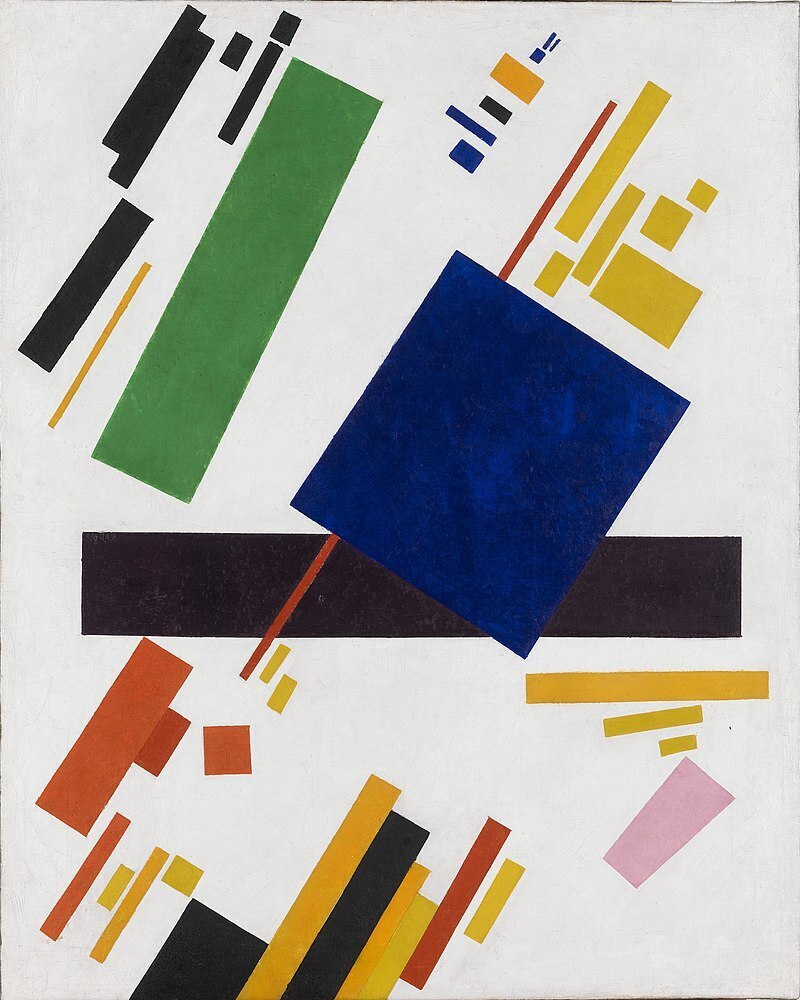
Kazimir Malevich – 'Suprematist Composition' (1916)