Sign up
You have successfully registered, a confirmation email has been sent to the email address you provided.

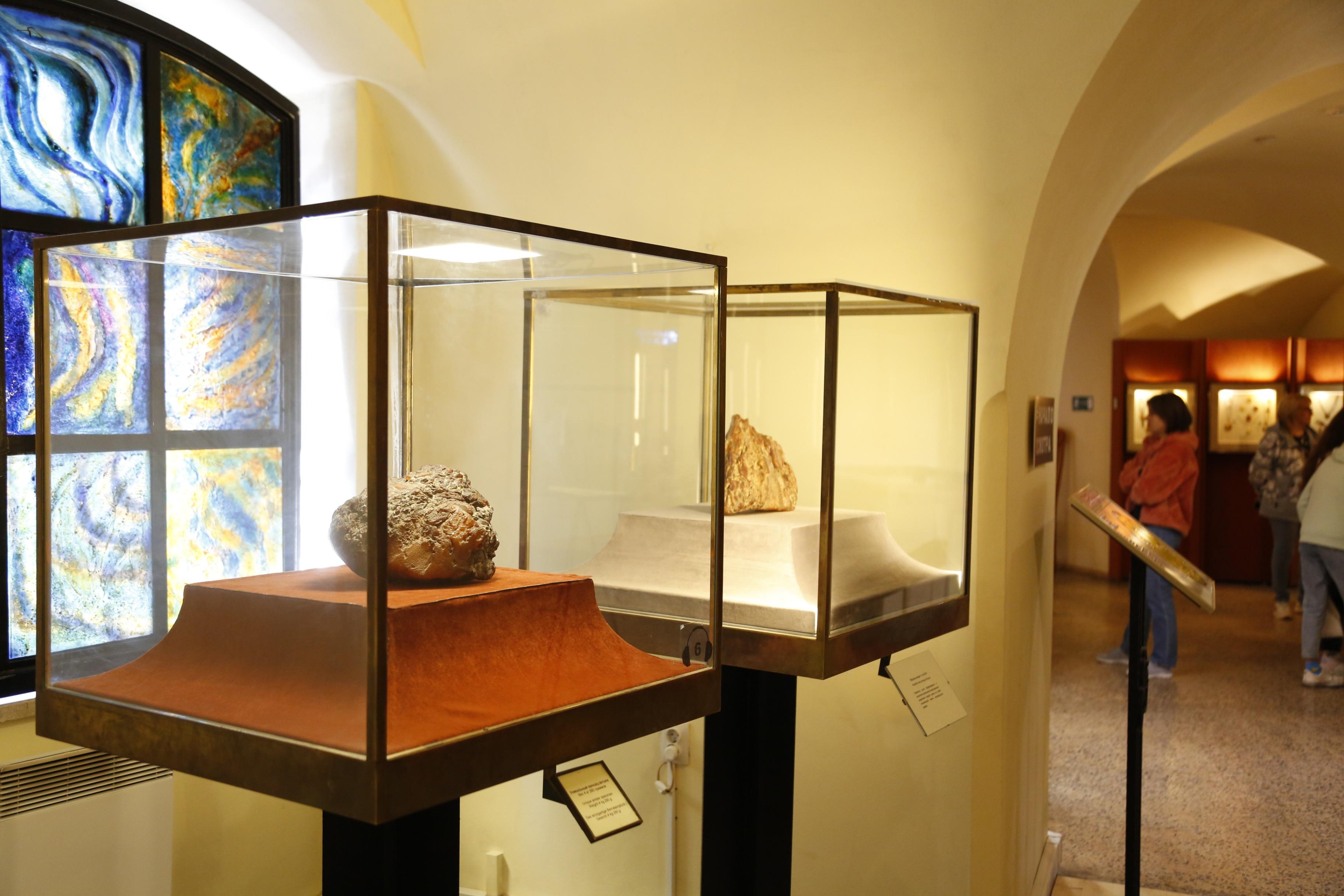
The Kaliningrad Amber Museum was opened in 1979 in a mid-19th-century fortress tower as a museum dedicated to a single mineral. Its collection includes the world’s second-largest "sun stone" weighing 4 kg 280 g. A large part of the collection consists of amber specimens with inclusions of flora and fauna fragments about 40 million years old. Of particular value are originals in amber by 17th-century masters, donated for permanent use to the museum in 1978 by the Armory Chamber of the Moscow Kremlin, as well as copies and scientific reconstructions of 16th–18th-century works created by contemporary artists of Leningrad/Saint Petersburg after originals from the collections of Russia’s major museums. The latter group also includes recreated items of the 16th–19th centuries from the artistic amber collection that was kept in Königsberg Castle and lost during World War II. Separate exhibition complexes are devoted to the Königsberg Amber Manufactory (1926–1945) and the Kaliningrad Amber Combine (since 1947) — the only enterprise in the world with a full cycle of amber extraction and processing. A significant part of the Amber Museum’s holdings consists of works by contemporary artists from Russia, Germany, Denmark, Italy, Latvia, Lithuania, Poland, the USA, France and Japan, including works by Kaliningrad and St. Petersburg artists donated to the museum by patron E. Yu. Tatuzov: jewelry, small-scale sculpture and exclusive household items.
