The Hermitage-Siberia Center is the third branch of the State Hermitage in Russia. It was established on the basis of the M. A. Vrubel Museum and opened in 2019. The museum is housed in the building of the Salamandra Insurance Company, built in 1914 in the neoclassical style to a design by the St. Petersburg architect Nikolai Veryovkin. This project is considered one of the architect's best: he masterfully used the relief terrain to create a harmonious and proportionate building. Although a significant part of the interior decoration was lost, the museum still preserves sections of flooring laid with embossed Metlakh tiles.
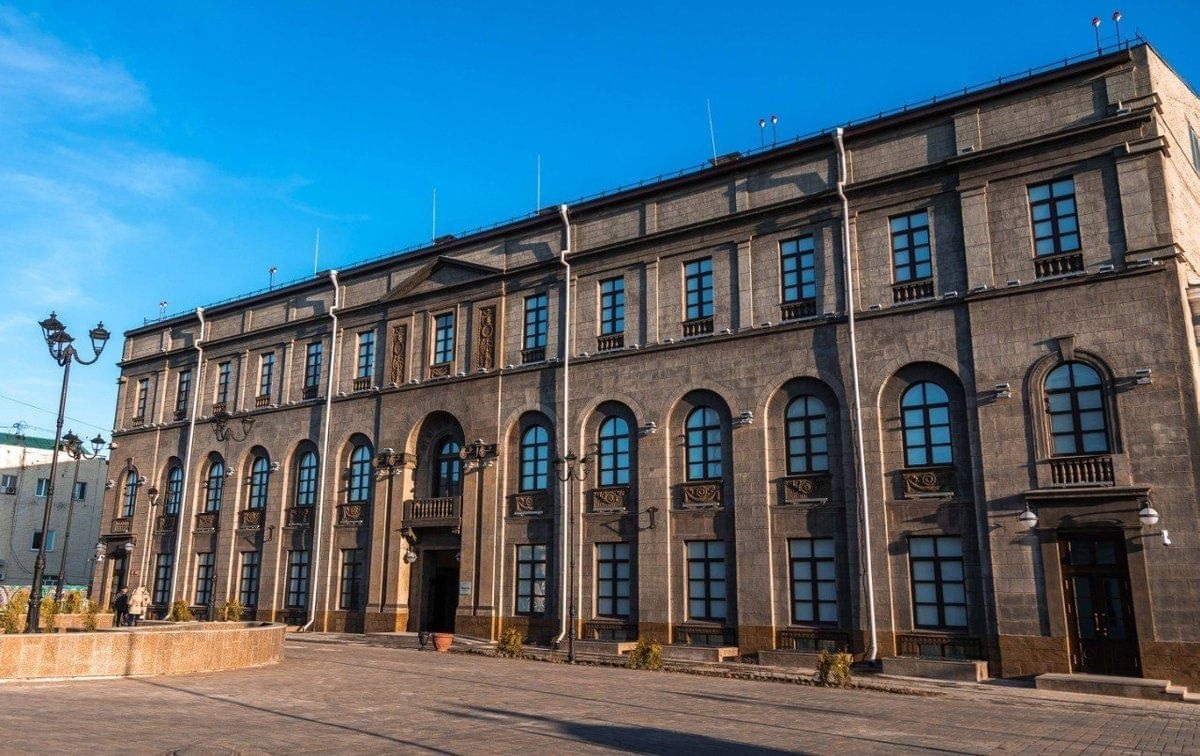
Photo: culture.ru
In 2015, during landscaping work and replacement of the building's utilities, ruined burials were discovered. As the center's director Farida Bureeva notes, many buildings in downtown Omsk stand on the site of an ancient archaeological monument. The Hermitage-Siberia Center was no exception. In 2016–2017, during reconstruction of the heating main, human remains and artifacts from the first millennium BCE were found. Researchers note that the finds themselves and their arrangement in the graves are unique. These artifacts are displayed in a showcase in the center's lobby.
The building of the Hermitage-Siberia Center houses not only exhibition halls but also the Theater of Painting and a lecture auditorium of the Youth Center; a souvenir shop operates there, and collections of Soviet and contemporary painting, graphic arts, and traditional art are kept on site. The restoration workshop is equipped with a vacuum table—rare for regional museums—that allows artworks to be secured to the work surface and speeds up restoration processes.
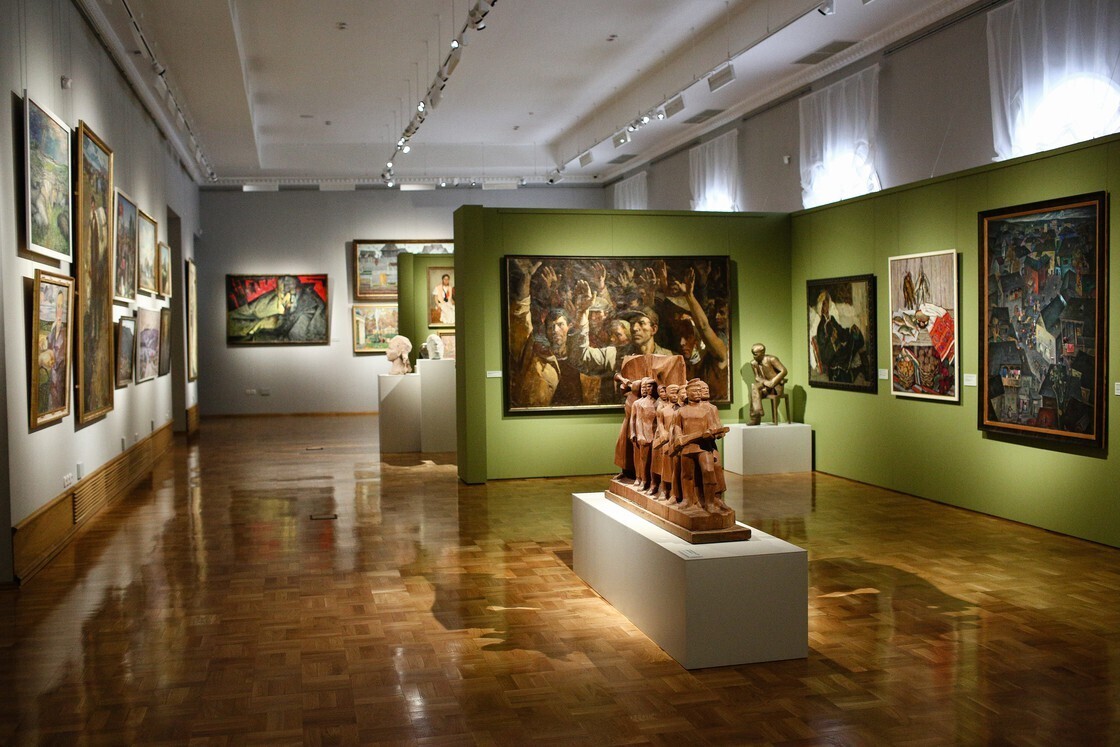
Photo: 1siberia.ru
From September 1, 2023 to March 17, 2024, the Hermitage-Siberia Center is hosting a large-scale exhibition "Conservatives and Rebels. French Painting and Sculpture of the 19th Century" from the Hermitage collection. The exhibition tells the story of a period when conservative French art was enriched by new movements in painting: Impressionism and Post-Impressionism. The revolutionary paintings are being shown in Omsk for the first time. The exhibition includes works by Vincent van Gogh, Paul Cézanne, Claude Monet, Auguste Renoir, Gustave Courbet, Edgar Degas, Auguste Rodin and other masters. An interesting fact: there are only nine works by Vincent van Gogh in the State Hermitage, and they are non-loanable. However, specially for the exhibition the artist's smallest painting—"Landscape with House and Ploughman," painted by van Gogh in 1889 while he was in the Saint-Rémy asylum—was brought in. Grand society portraits sit alongside the expressive paintings of the innovators. The exhibition is arranged so that visitors can become acquainted with all the genre and thematic directions of 19th-century French painting and sculpture and feel like guests of a Parisian art salon.

"Landscape with House and Ploughman" — a painting by Vincent van Gogh from the collection of the State Hermitage