Sign up
You have successfully registered, a confirmation email has been sent to the email address you provided.

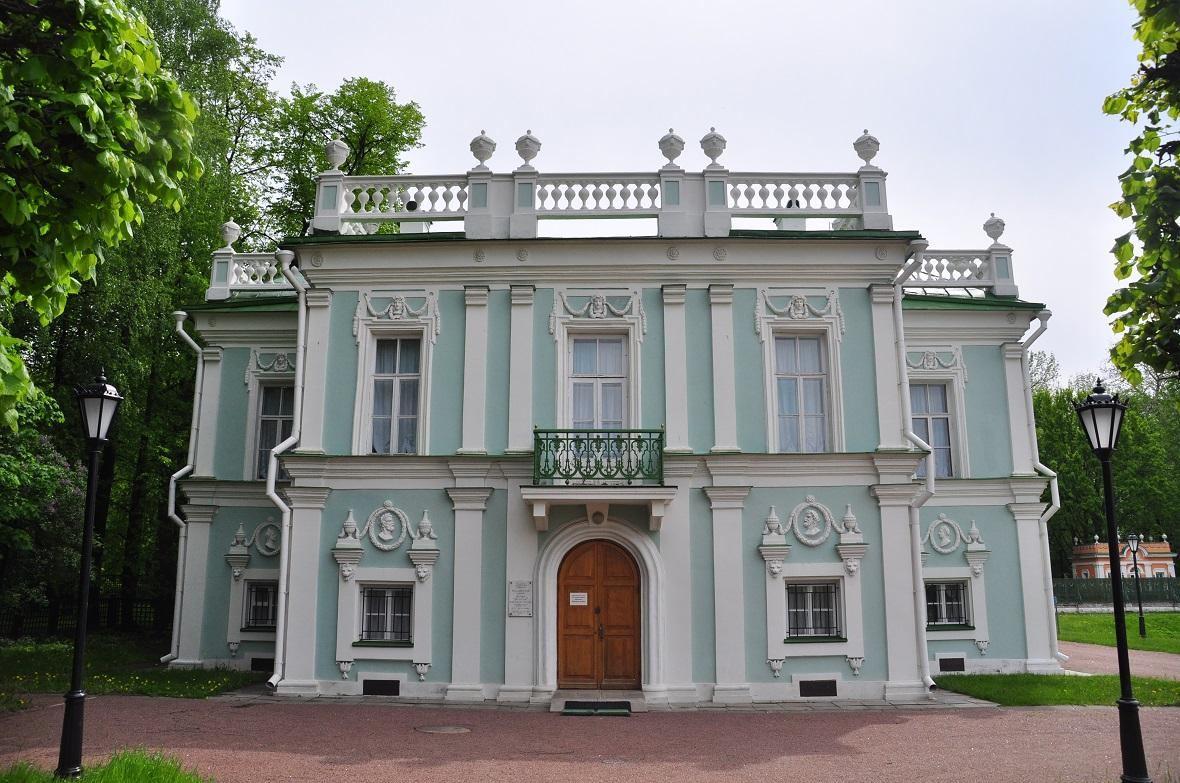
The Italian House was built in 1754-1755 under the direction of Yu. I. Kologrivov — a refined connoisseur of the arts who received architectural training in Rome. The pavilion's exterior clearly reveals the function of each of its two floors. The palatial character of the second-floor interiors is expressed in the facade architecture: tall window openings, delicate railings on the loggia and balcony, and a cornice topped with an ornate balustrade. The small rooms of the visually lower first floor, with square windows, were intended to house "rarities": rare beadwork and colored-marble paintings, models of the Jerusalem and Bethlehem churches in glass cases, ancient sculpture, and much more. The pavilion also hosts exhibitions related to its historical past when these "rarities" were displayed — for example, the "Bead Stories" exhibition, which tells of the triumph of beads in 19th-century Russia.
