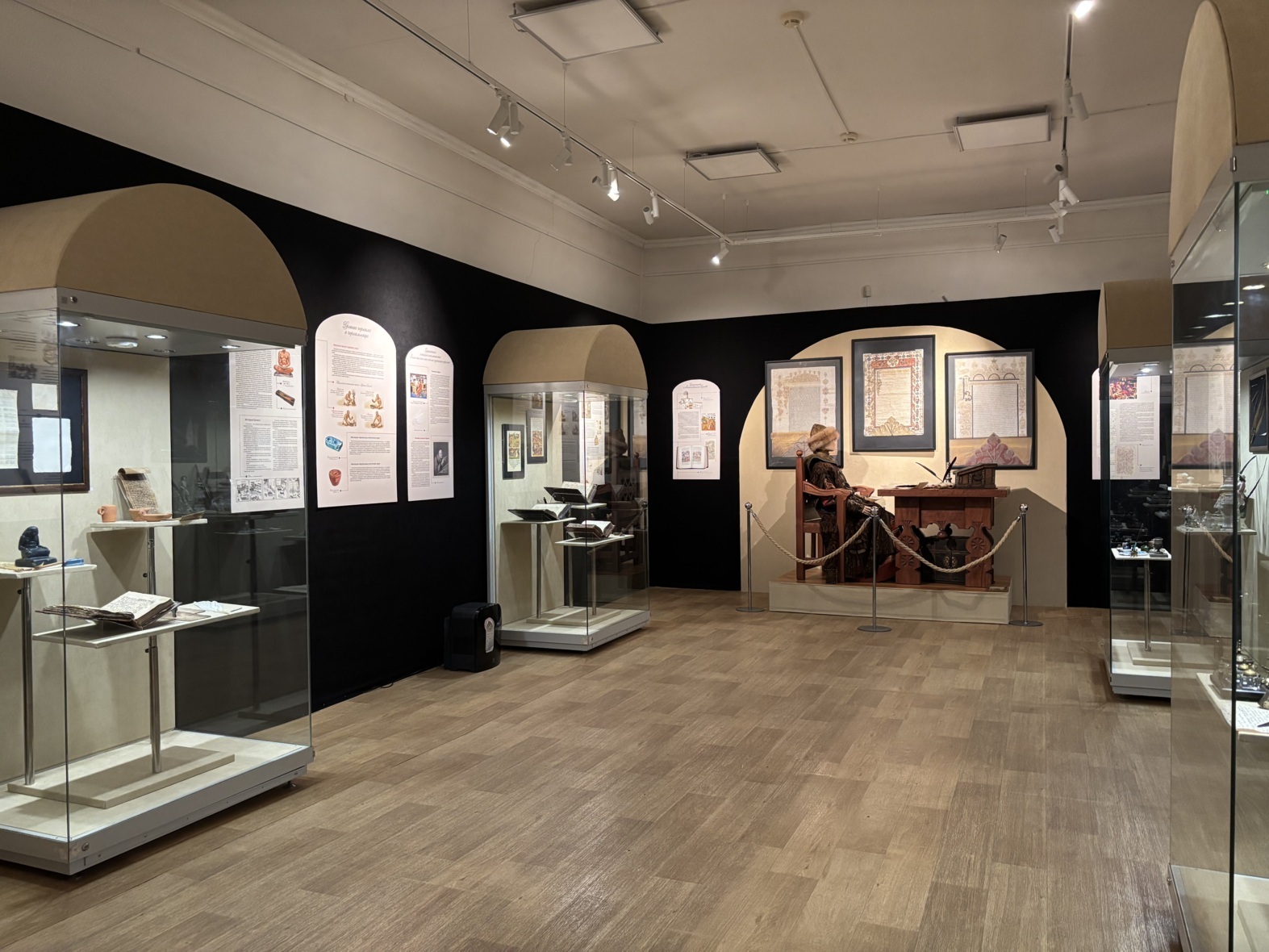
The new exhibition project 'Ink Kingdom' is dedicated to the art of writing with ink. It introduces visitors to the evolution of writing implements from Ancient Egypt to the present day and highlights Alexandrovskaya Sloboda's contribution to the development of medieval culture.
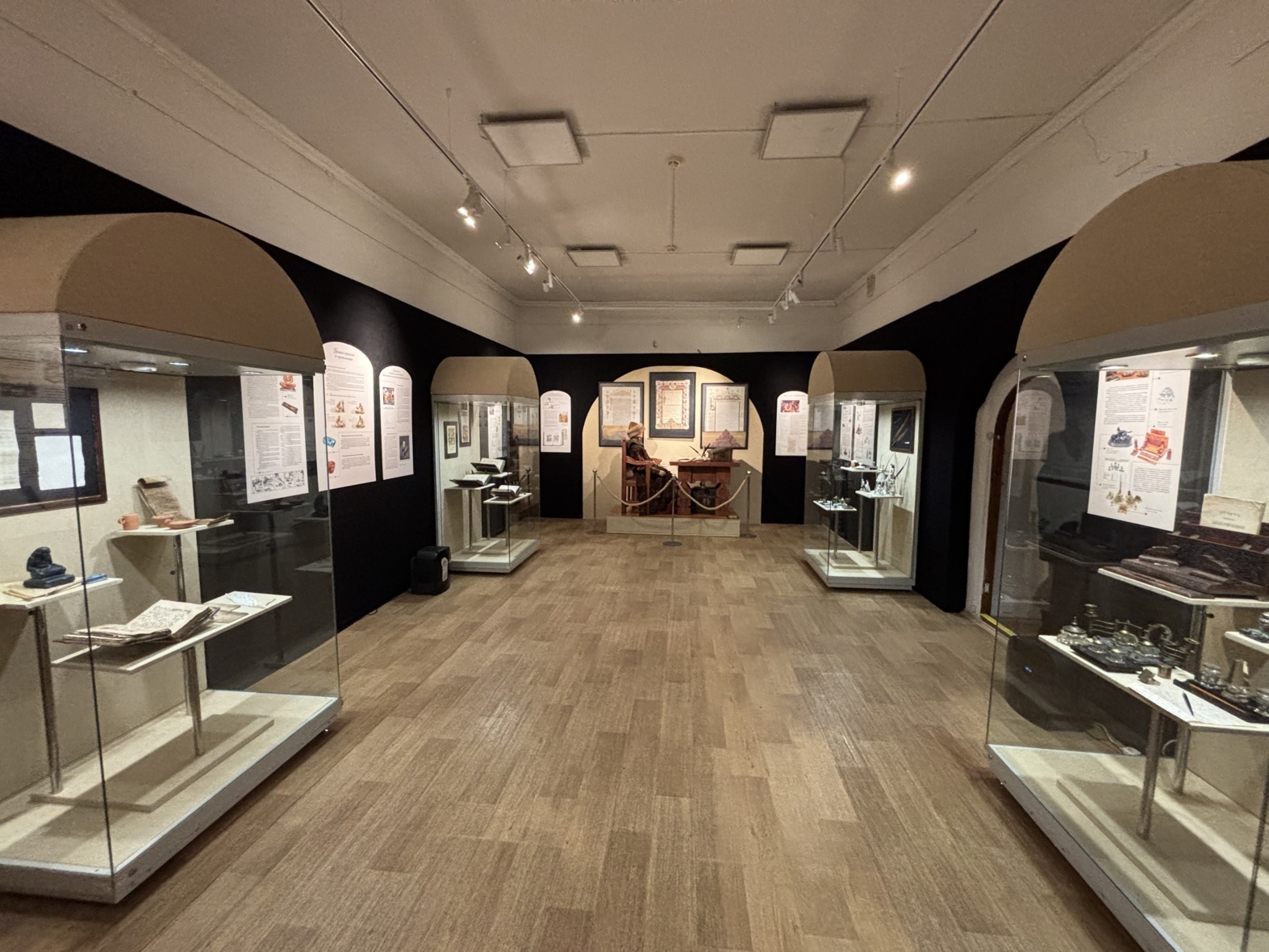
The exhibition features more than 140 unique exhibits from the 18th–21st centuries from the collections of L. Belsky and S. Kuvshinov — members of the Moscow Collectors' Club 'Iskatel' — as well as rarities from the 16th–17th centuries from the museum's holdings. Some items are on display for the first time.
The theme of the new project is presented through eight sections, each covering a specific period in the evolution of materials and implements used for writing.
The history of ink-writing implements spans several millennia. The oldest of these are displayed in the first section of the exhibition.
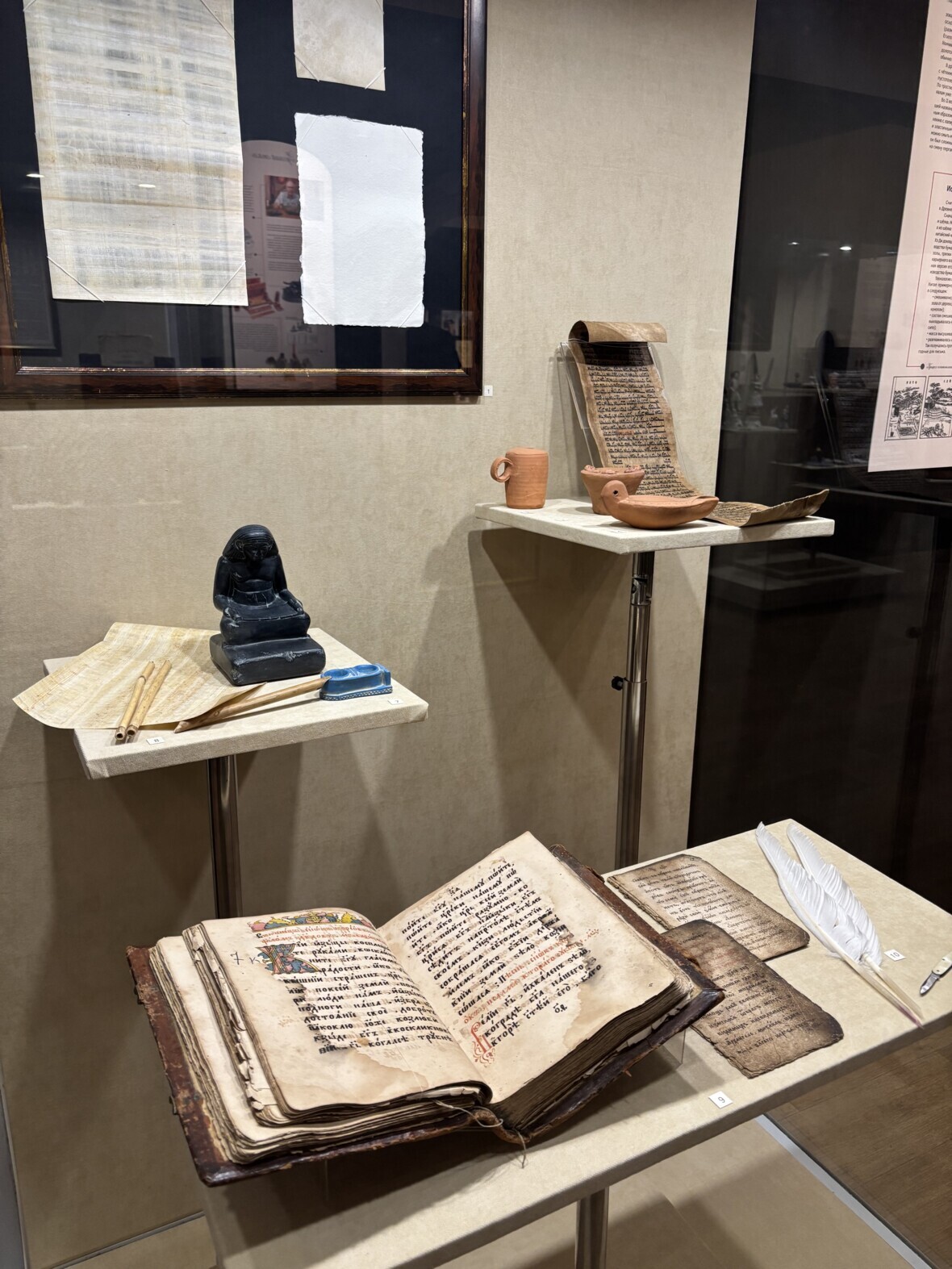
The history of ink-writing implements spans several millennia. The oldest of these are displayed in the first section of the exhibition. For a long time the primary writing material was papyrus, written on with reed pens. Later it was replaced by parchment, and reed pens were superseded by quills, which were in use up to the 19th century. From the 11th century, paper began to be used widely for writing.
A separate section is devoted to the domestic history of writing, which began to take shape in Rus' from the late 9th century. Texts were copied by professional scribes who most often worked in workshops at major monasteries. However, in the 16th century a special royal book-writing workshop (scriptorium) was established by order of Ivan the Terrible at his state residence, Alexandrovskaya Sloboda. It was here, during the reign of the first Russian tsar, that new central administrative offices — the prikazy — operated and the foundations of national record-keeping were formed.
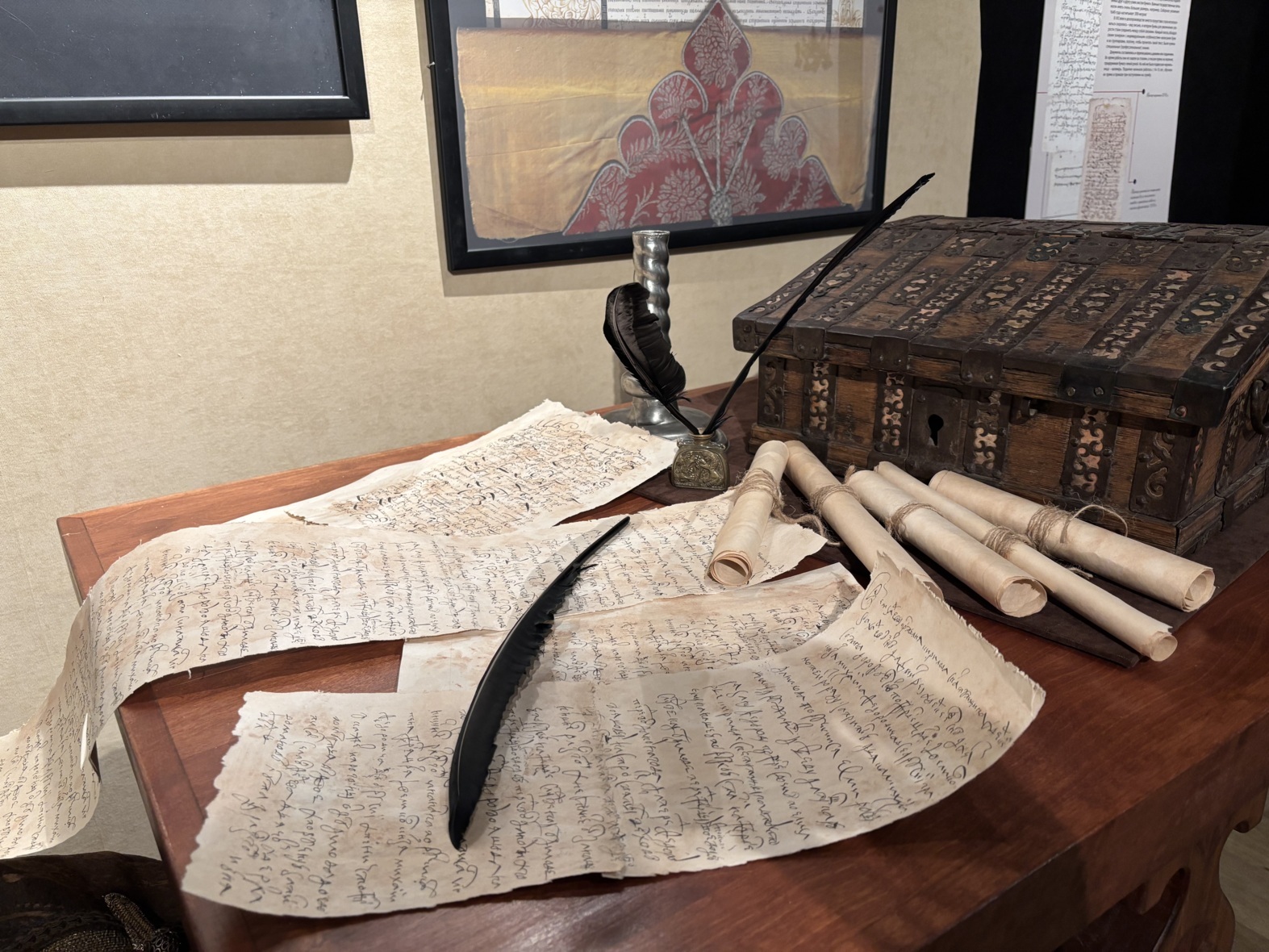
In the Middle Ages, both in Europe and in Russia, it was considered improper for an aristocrat to write personally — scribes did that. Ink tools served a utilitarian function and were not especially decorated. However, beginning in the 17th century, when the epistolary genre became fashionable, there was a shift from disparate items to ink sets crafted in a unified style using costly materials. These sets adorned the desk and displayed their owner's status. The exhibition presents several dozen sets from different countries around the world.
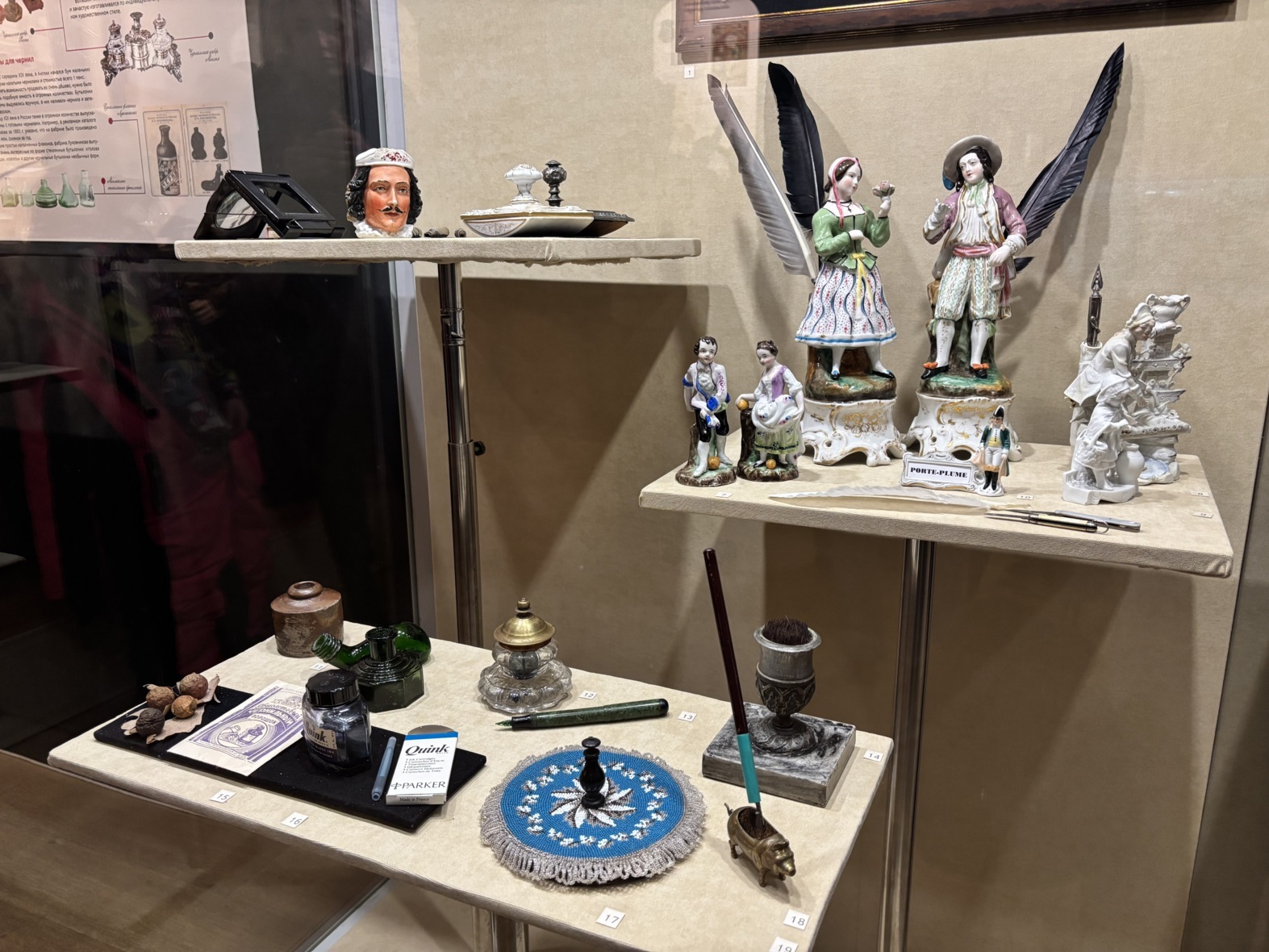
Alongside the status items are inexpensive, mass-produced pieces made in European and Russian factories in the late 19th and early 20th centuries, as rising literacy rates created demand for them.
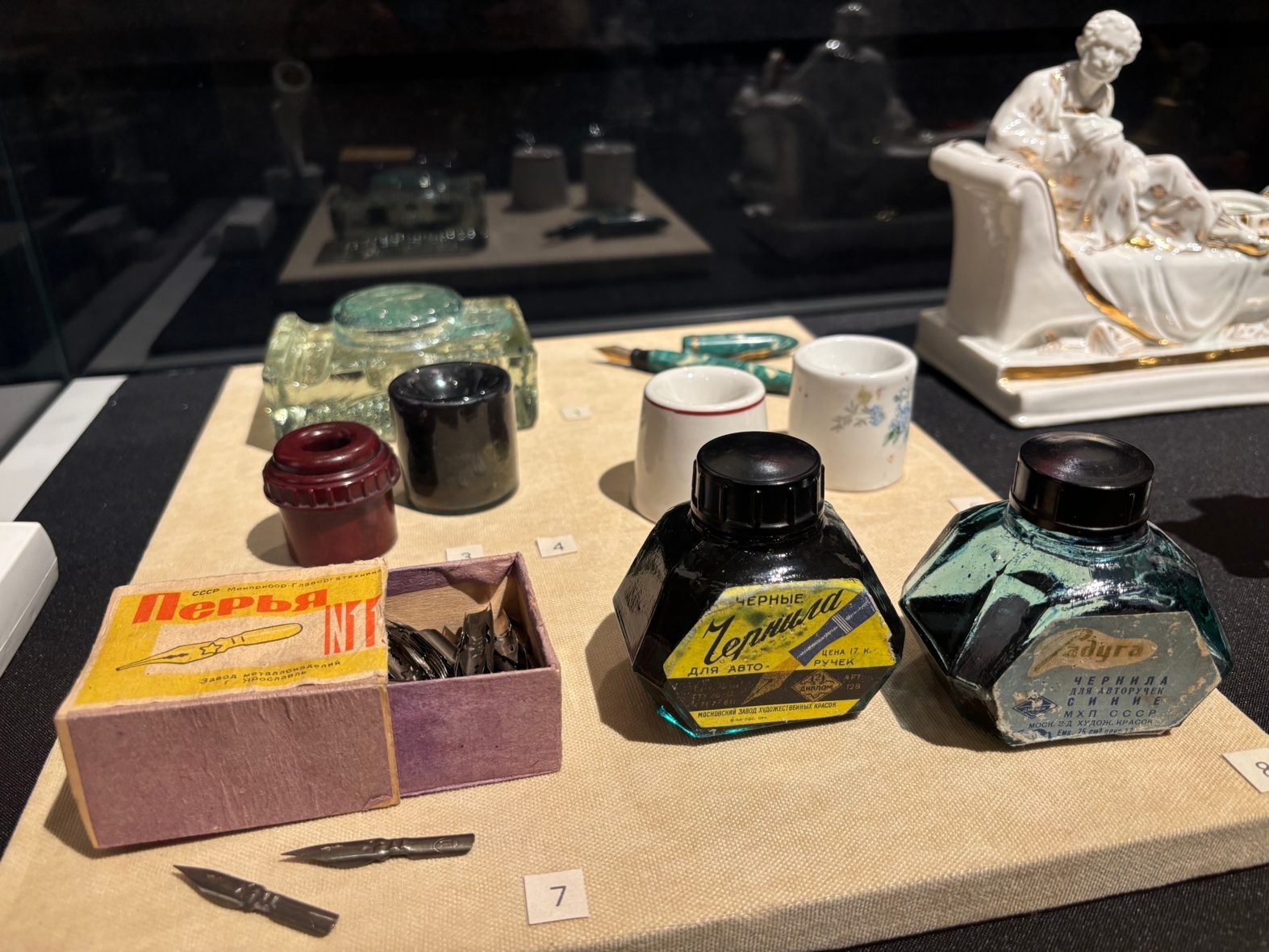
People in our country wrote with ink up until the 1970s. During the Soviet period many desktop writing sets with fountain pens were produced: school, business, and souvenir sets, including those dedicated to commemorative and anniversary dates.
In the 19th century metal nibs replaced quill pens, and by the beginning of the 20th century the fountain pen became the main instrument for writing with ink. The exhibition features legendary fountain pens of the first half of the 20th century produced by leading global companies — Waterman, Parker, and others.
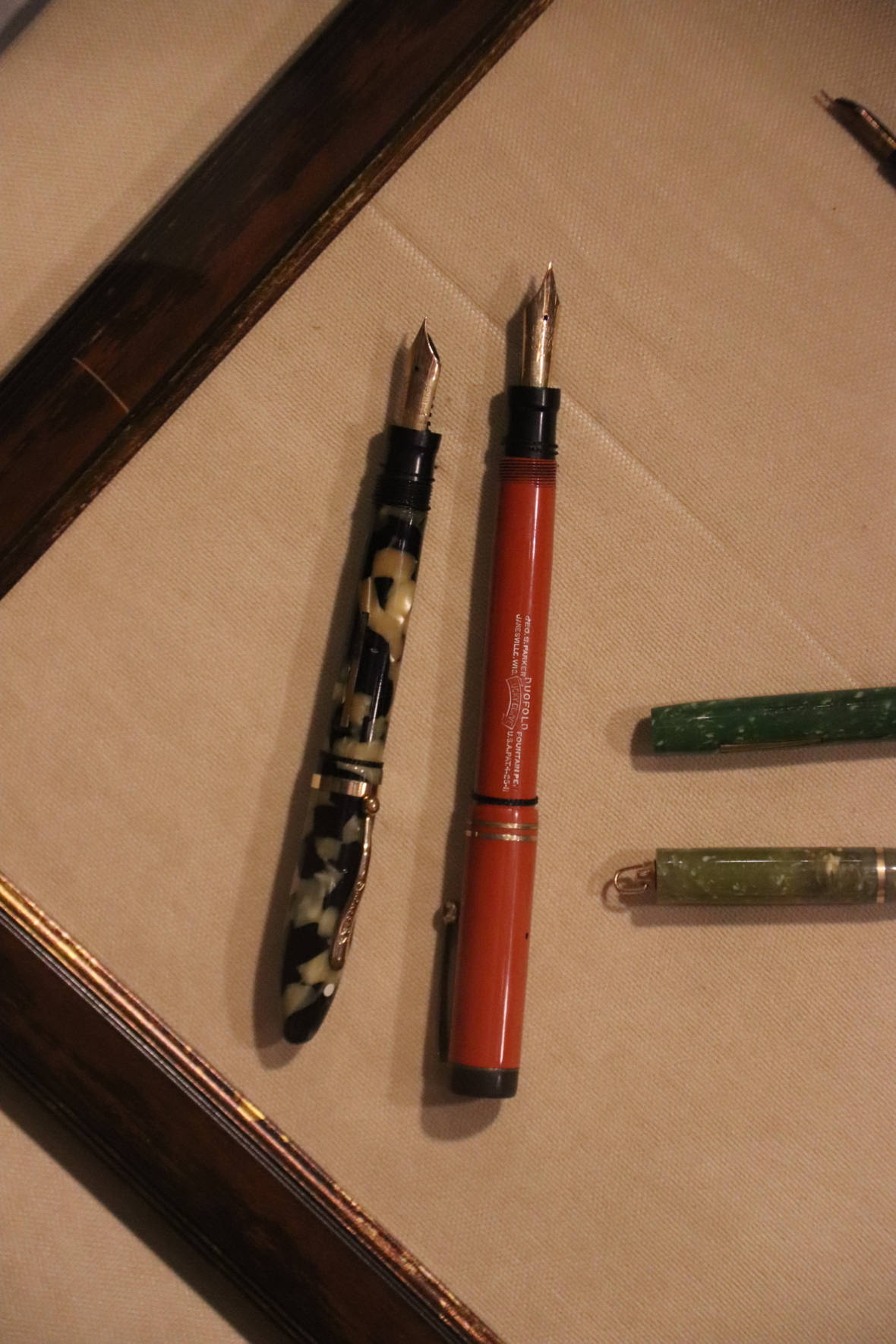
Today fountain pens have fallen out of widespread use and become exclusive items. From a utilitarian writing tool they have been transformed into objects of jewelry and engineering craftsmanship, elements of personal image, and fashionable luxury accessories. A vivid example of this are unique author-made fountain pens produced as one-offs by the companies Talistim and Artus.
The exhibition includes an interactive zone where visitors can try writing with reed, quill, and metal nibs, and also experience the aromas of aromatic inks from world-famous brands produced in limited editions.
Specifically for the project, Collector Club member Yefim Vasilyev created an exact replica of the legendary 18th-century pen by Nicolas Bion based on photographs and surviving examples; this replica will be part of the exhibition. Thanks to multimedia content, visitors will be able to see the process of its creation.
In addition, the exhibition includes a photo zone. The journey through the new exhibition becomes especially engaging when taking a guided tour. Payment for visits and tours is available via the Pushkin Card.