Sign up
You have successfully registered, a confirmation email has been sent to the email address you provided.

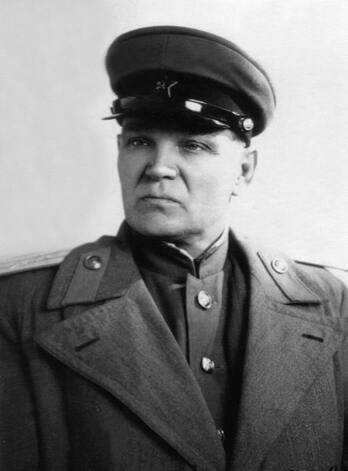
Vasily Ivanovich Agapkin – a Russian Soviet military composer, musician, conductor, and colonel. He was born in the village of Shancherovo in the Ryazan Governorate. At the age of one he lost his mother; his father worked as a hired farmhand and loader at the Astrakhan port and died when his son was seven. At the age of ten the boy was taken on as an apprentice in the orchestra of the 308th Reserve Tsarev Battalion of the Astrakhan Regiment. Five years later he had already become the leading cornet soloist in the orchestra. From 1899 to 1906 Agapkin served as a hired musician in various military bands in the Caucasus.
In 1912, inspired by the outbreak of the First Balkan War, he wrote the march "Farewell of Slavianka", which very quickly gained enormous popularity. After the victory of the October Socialist Revolution, Vasily Agapkin voluntarily joined the Red Army in 1918 and organized a brass band in the 1st Red Hussar Warsaw Regiment. In 1920 Agapkin returned to Tambov, where he led a music studio and the Cheka orchestra. In 1922 he was transferred to Moscow and until his retirement in 1955 headed various bands within the Cheka-OGPU-NKVD-NKGB military structure.
In 1924 he took part in Lenin's funeral. In 1928 he organized a brass band composed of homeless children. In 1941–42 he was chief of the bands of the OMSDON division of the NKVD, and in that capacity served as the principal conductor of the combined orchestra at the historic parade on Red Square on 7 November 1941. He was also a participant in the Victory Parade on 24 June 1945. For services to the Motherland and his major contribution to the development of musical art, Vasily Ivanovich was awarded the Order of Lenin, two Orders of the Red Banner, and many medals. Vasily Ivanovich Agapkin passed away on 29 October 1964 in Moscow and was buried at Vagankovo Cemetery.