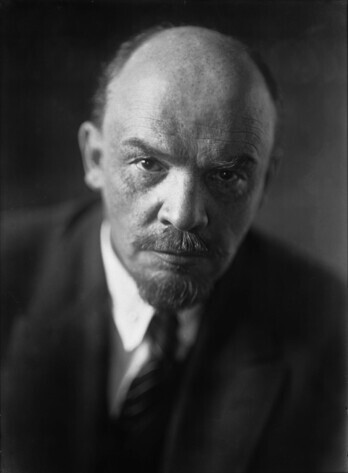
Vladimir Ilyich Ulyanov (Lenin) – a Russian revolutionary, a leading theorist of Marxism, a Soviet political and state figure, and the first person in world history to create a socialist state. The future revolutionary was born in Simbirsk (now Ulyanovsk) and was the third child in the family of the director of public schools. Lenin graduated from the Simbirsk Gymnasium with a gold medal and enrolled in the law faculty of Kazan University, but was soon expelled for participating in student protests. His active revolutionary activities led to his arrest and exile to Siberia.
During his exile Lenin wrote key works, including "The Development of Capitalism in Russia." After the split of the RSDLP in 1903 he became the leader of the Bolsheviks and played a leading role in the 1905–1907 revolution. After the revolution Lenin was forced to emigrate; he lived in Switzerland, France, and England and continued his revolutionary activities. In 1917, after the February Revolution, he returned to Russia and led the October Revolution, after which he became Chairman of the Council of People's Commissars (the government) of the RSFSR.
During the Civil War Lenin led the struggle against the White Guards and subsequently the construction of the Soviet state. He died at the age of 53 and was buried in the Mausoleum on Red Square in Moscow. Lenin was an outstanding revolutionary, politician, and thinker. His ideas had a profound influence on the development of the global communist and socialist movement.
A service for finding museums across Russia, on a map, as a list, and in curated collections
Sign up
You have successfully registered, a confirmation email has been sent to the email address you provided.
Продолжая использовать наш сайт, Вы соглашаетесь на обработку файлов cookie. Data is processed to provide our services and improve the quality of our website and services.