Sign up
You have successfully registered, a confirmation email has been sent to the email address you provided.

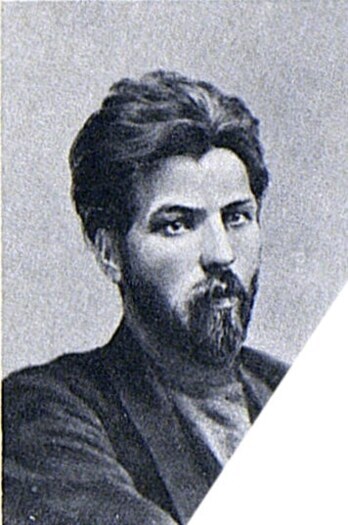
Panteleimon Nikolaevich Lepeshinsky was an activist of the revolutionary movement, one of the organizers of public education in the USSR. He was born on February 29 (March 12) 1868 in the village of Studenets in Mogilev Governorate into the family of a village priest. He studied at the Faculty of Physics and Mathematics of Saint Petersburg University (1886–1890, expelled for participating in a People's Will circle), and graduated externally from Saint Vladimir University in Kyiv (1891).
In 1890 he joined the revolutionary movement. He was a member of the St. Petersburg "Union of Struggle for the Liberation of the Working Class", served as an agent for the newspaper "Iskra", and was a member of the organizing committee for convening the 2nd Congress of the RSDLP. In 1903 he joined the Bolsheviks. From 1907 to 1909 he taught at the Orsha Real School, and in 1910 in the village of Shchyolkovo in Moscow Governorate. In 1918–1919 he was a member of the collegium of Narkompros, heading the school reform department.
In 1919–1920 he was Deputy People's Commissar of Education of the Turkestan ASSR (Tashkent). From 1925 he served as chairman of the Central Committee of the International Organization for Assistance to Fighters of the Revolution in the USSR. From 1927 to 1930 he was director of the Historical Museum, and in 1935–1936 of the Museum of the Revolution of the USSR. Lepeshinsky was one of the initiators and authors of the "Regulations on the Unified Labour School of the RSFSR" and the "Basic Principles of the Unified Labour School of the RSFSR" (1918). Under his leadership the first joint curricula and programs were created. He justified the model of a new type of educational institution—the school-commune, i.e., a community built on the principles of self-government, self-service and the organization of "mental forms of labour". Panteleimon Nikolaevich Lepeshinsky passed away on September 29, 1944 in Moscow.