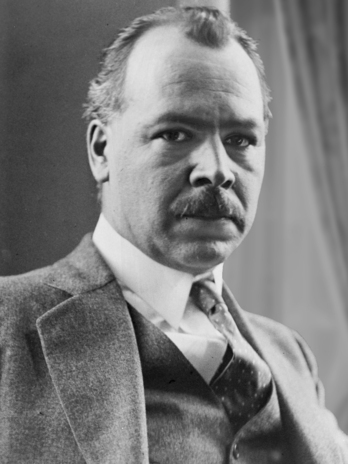
Nikolai Ivanovich Vavilov was a Russian geneticist, botanist, plant breeder, agronomist, and geographer. Nikolai Ivanovich Vavilov was born in Moscow on November 25, 1887, into the family of a wealthy merchant. From a young age he showed an interest in the natural sciences. After graduating from a commercial school, Vavilov entered the Moscow Agricultural Institute.
Vavilov continued his education abroad, studying plant breeding in France and Germany, and genetics in England. In 1915 he carried out his first studies of plant immunity. After the October Revolution Vavilov remained in Russia. He headed the Department of Genetics at Saratov University (1917–1921), and from 1923 he led the Institute of Experimental Agronomy, where large-scale research was conducted to improve agriculture and to study the climatic zones of the USSR.
In 1929 Vavilov became president of VASKhNIL — the leading scientific center for the development of large-scale commercial agriculture. Under his leadership more than one hundred scientific centers were created. From 1935 to 1940 he continued research in genetics and plant breeding, leading expeditions across the country. However, he was soon arrested on charges of anti-Soviet activity. Vavilov was sentenced to death by firing squad and died in the summer of 1942 in the prison hospital in Saratov. Vavilov is the author of the law of homologous series in the hereditary variability of organisms and the creator of the doctrine of the biological foundations of breeding and of the centers of origin and diversity of cultivated plants.
A service for finding museums across Russia, on a map, as a list, and in curated collections
Sign up
You have successfully registered, a confirmation email has been sent to the email address you provided.
Продолжая использовать наш сайт, Вы соглашаетесь на обработку файлов cookie. Data is processed to provide our services and improve the quality of our website and services.