Sign up
You have successfully registered, a confirmation email has been sent to the email address you provided.

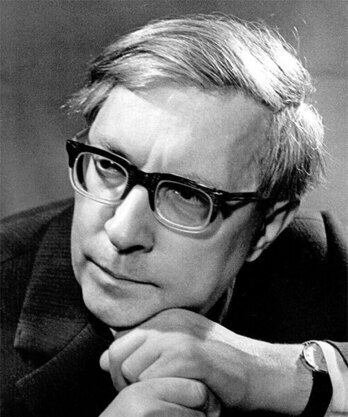
Lev Ivanovich Oshanin was a Soviet songwriter-poet, the author of more than 70 collections of poetry, narrative poems and plays. He was born on 17 (30) May 1912 in Rybinsk (now in Yaroslavl Oblast) into a noble family. His father worked as a private attorney for the city court, his mother was a music teacher. There were six children in the family — five brothers and a sister. From 1922 he lived in Moscow. After finishing eight grades Oshanin worked as a turner at an iron foundry, and then as a guide at an exhibition that later became VDNKh. From 1932 to 1935 he was in the tundra working on the construction of the town of Khibinogorsk. He worked at the Khibinogorsk apatite factory, then as director of the miners' club, and later as a roving correspondent for the newspaper "Kirovsky Rabochy".
Lev Ivanovich returned to the capital, where in 1936 he entered the A. M. Gorky Literary Institute. During the Great Patriotic War he and his family were evacuated to Kazan. Then the family ended up in Yelabuga. Oshanin, having obtained a recommendation from Pasternak, joined the Union of Soviet Writers. He was sent to the front by the Political Directorate of the Red Army, worked for military newspapers, and performed before the troops.
In the autumn of 1945 the famous song "Dorogi" ("Roads") was written to Oshanin's verses. Also hugely popular were "Techet Volga" ("The Volga Flows"), "Solnechny Krug" ("Sunny Circle"), "Zachem menya okliknul ty?" ("Why Did You Call Out to Me?"), "A u nas vo dvore est devchonka odna" ("There's One Girl in Our Yard"), and "Prosto ya rabotayu volshebnikom" ("I Just Work as a Magician"). Until the last year of his life he ran a seminar for young poets at the Literary Institute. Lev Ivanovich Oshanin died on 30 December 1996 in Moscow and was buried at Vagan'kovskoye Cemetery.