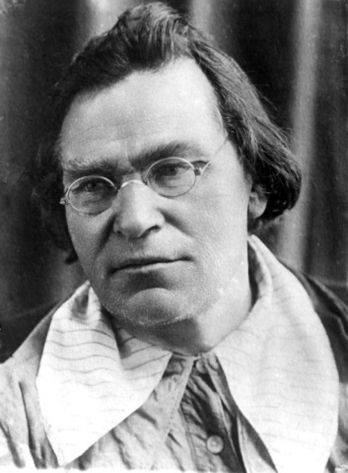
Andrey Vasilyevich Anokhin was a scholar-ethnographer, composer, and educator. Alexander Anokhin was born in the village of Pravyye Lamki in the Tambov Governorate. In the early 1870s the family moved to Biysk. The scholar was educated at the Biysk School and then continued his studies at the Moscow Synodal School and at the choirmaster courses of the St. Petersburg Court Singing Chapel. From 1900 Anokhin lived in Tomsk, taught and pursued composition, and became a member of the Tomsk branch of the Russian Musical Society and the Tomsk Society for the Study of Siberia, headed by G.N. Potanin.
Between 1906 and 1931 he undertook extensive ethnographic and folklore expeditions across Southern Siberia, Mongolia, and Eastern Kazakhstan, during which he collected invaluable materials that are now kept at the Peter the Great Museum of Anthropology and Ethnography (Kunstkamera). Anokhin made an invaluable contribution to the study of the musical folklore of the indigenous peoples of Siberia: he recorded and arranged more than 500 Altai songs, about 300 songs of the Teleuts, Khakas, and Tuvans, described national musical instruments, and investigated features of melody, mode, and rhythm in folk music. From 1926 he lived in Ulale (now Gorno-Altaysk), worked at a museum, and taught at a pedagogical college. He died in 1931 and was buried in the Kuyum tract of the Chemalsky District.
A service for finding museums across Russia, on a map, as a list, and in curated collections
Sign up
You have successfully registered, a confirmation email has been sent to the email address you provided.
Продолжая использовать наш сайт, Вы соглашаетесь на обработку файлов cookie. Data is processed to provide our services and improve the quality of our website and services.