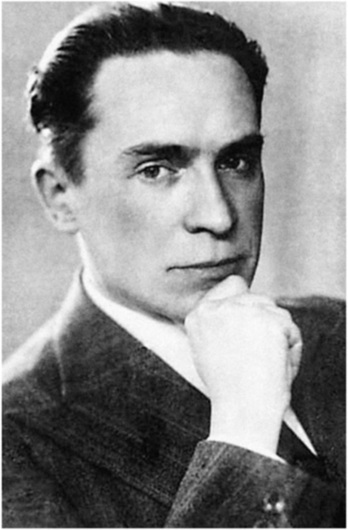
Alexander Leonidovich Chizhevsky – a Russian biophysicist, founder of heliobiology and aeroionization. Alexander Leonidovich Chizhevsky was born in Ciechanowiec (now Poland) into a military family. After completing his secondary education in Kaluga, where he met K. E. Tsiolkovsky, Chizhevsky continued his studies in Moscow, attending various educational institutions: the Moscow Archaeological and Moscow Commercial Institutes, and studying at the Physics and Mathematics and Medical faculties of Moscow University.
In 1916 he volunteered for the front in World War I, was wounded and demobilized. Chizhevsky's scientific career was marked by significant achievements. He worked at the Biophysical Institute, taught in the Laboratory of Zoopsychology, organized the Central Research Laboratory of Ionization, and headed several laboratories at different institutions. His research covered a wide range of topics, including the influence of solar activity on the biosphere, the role of solar activity in the emergence of epidemics, and the effects of aeroions on living organisms. He developed a device to increase the concentration of negative aeroions — "Chizhevsky's chandelier". He was Honorary President of the International Congress on Biological Physics and Space Biology (USA, 1939). Alexander Leonidovich died on December 20, 1964, and was buried at Pyatnitskoye Cemetery in Moscow.
A service for finding museums across Russia, on a map, as a list, and in curated collections
Sign up
You have successfully registered, a confirmation email has been sent to the email address you provided.
Продолжая использовать наш сайт, Вы соглашаетесь на обработку файлов cookie. Data is processed to provide our services and improve the quality of our website and services.