Sign up
You have successfully registered, a confirmation email has been sent to the email address you provided.

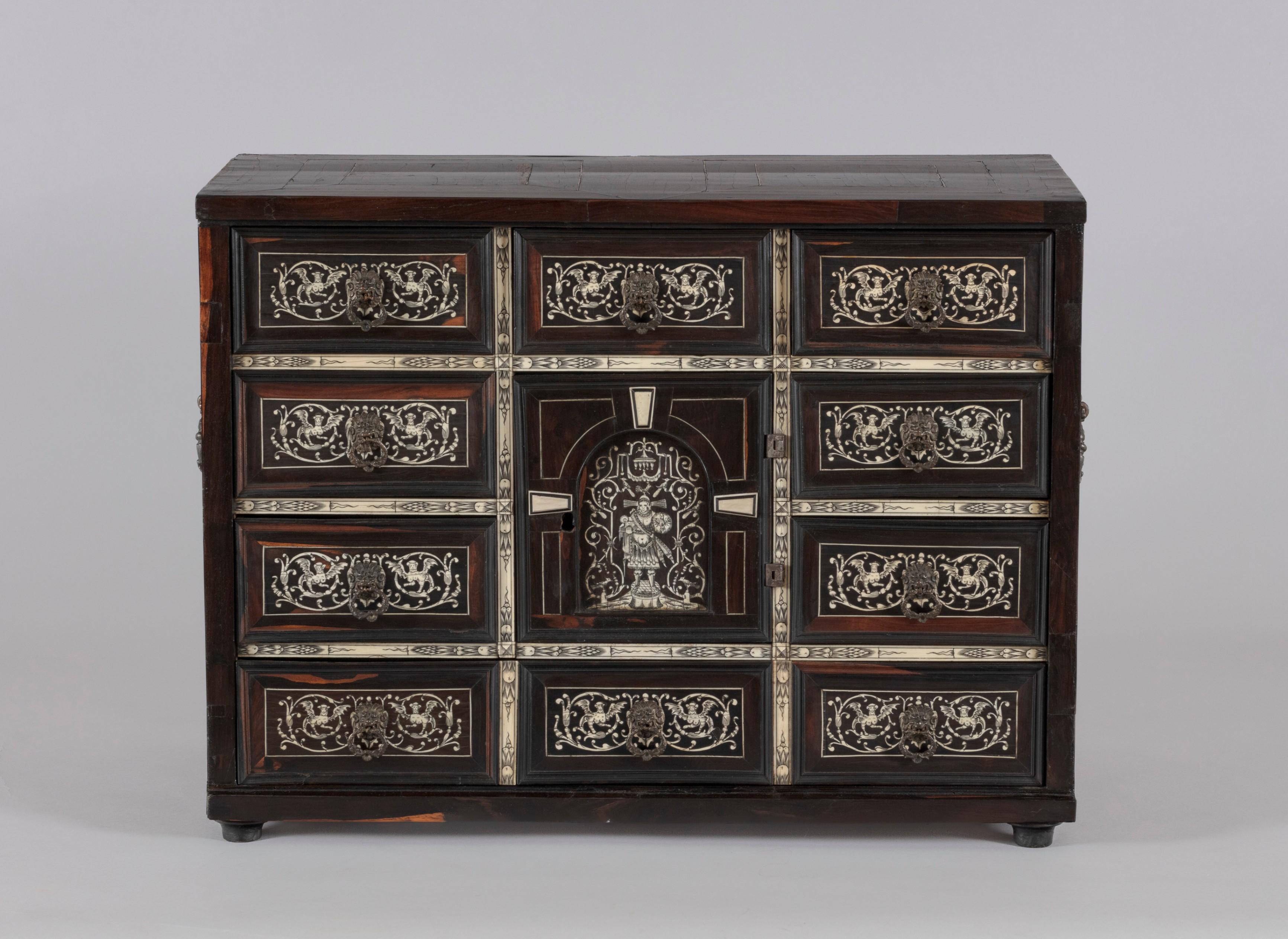
The exhibition presents objects that vary greatly in form, style and purpose. For example, decorative items (tapestries, sculpture, porcelain figurines), household objects (furniture, tableware, lighting fixtures), items of spiritual life (analoy, tabernacle) and objects for leisurely pursuits (playing cards and gaming tables, chess). At the same time a large number of items — such as an analoy, a jardinière, a portshez and a tagan — may seem exotic to a modern viewer both in purpose and in name. Here the past meets the present, and one of the museum's main functions is to make that encounter engaging. Works of decorative and applied art from Germany, Italy, France and other European countries can serve as a clear example of how styles — Gothic, Renaissance and Baroque — succeeded one another in the art of the early modern period. Many of the items have not left the museum's collections until now and were specially restored to be shown to the public for the first time. Among them are a tapestry depicting the coat of arms of the Venetian Tiepolo family and an 18th-century Rococo chaise longue.
