Sign up
You have successfully registered, a confirmation email has been sent to the email address you provided.

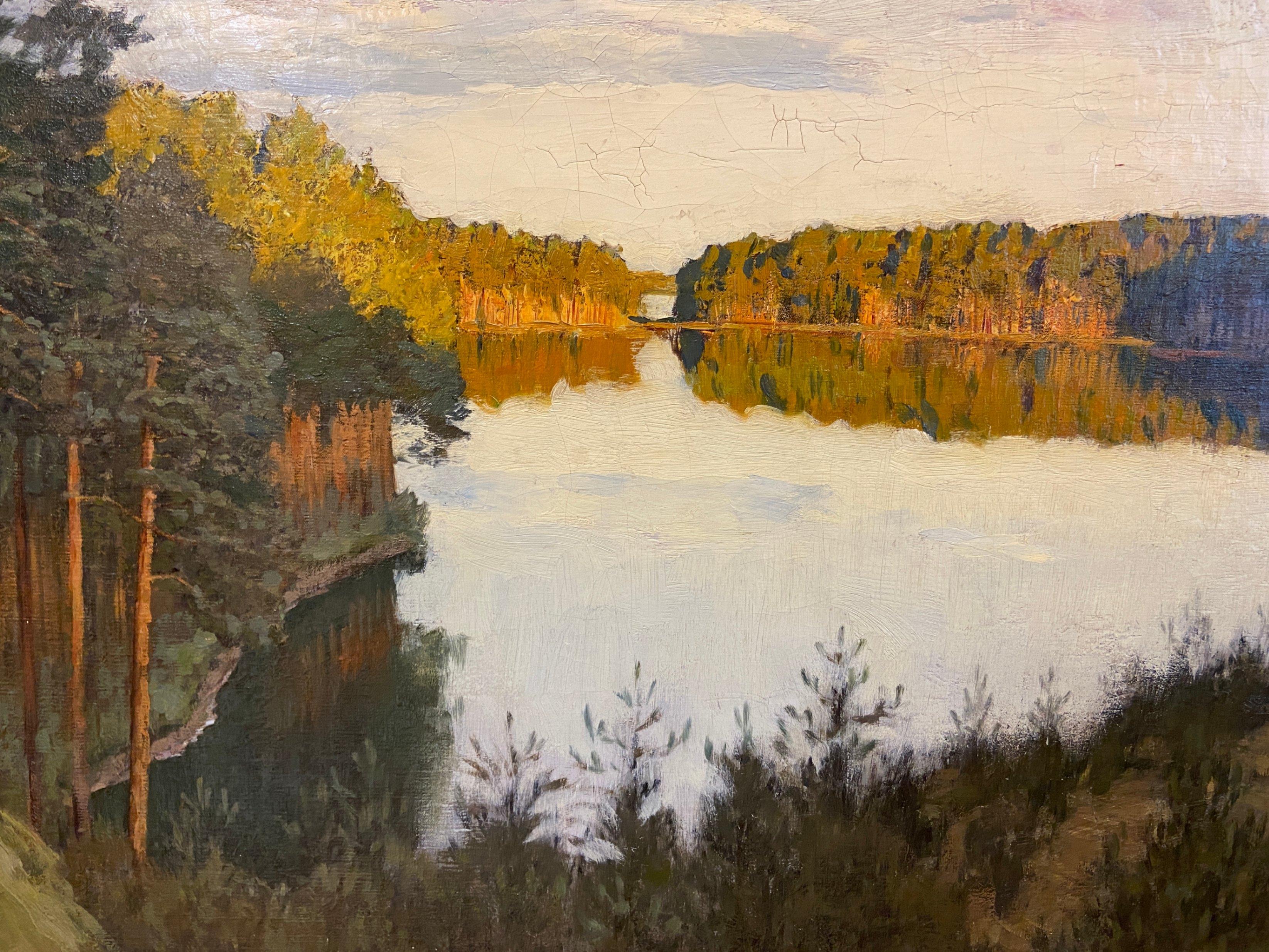
The Rostov Regional Museum of Fine Arts houses a permanent exhibition dedicated to Russian art of the 16th–20th centuries. The Russian art represented in the museum provides a clear picture of national culture from the 16th to the 20th centuries. It traces all the main stages in the development of secular realist painting, beginning with parsuna portraits of the late 17th century — 'Portrait of Hetman M.S. Samoylovich' and 'Portrait of Ataman Yermak' from the early 18th century. Painting of the second half of the 18th century is represented by portraits by artists of that time: A.P. Antropov and K.L. Khristinek. Among the landscape works, notable are M.N. Vorobyov's 'View of Constantinople, Pera and Scutari', N.G. Chernetsov's 'Landscape with a Gorge', and the seascapes of A.P. Bogolyubov. Romantic paintings were devoted to the 'eternal and free element' by I.K. Aivazovsky ['Moonlit Night', 'Sea'] and his pupil L.F. Lagorio ['Storm']. The exhibition includes the rare and original canvas by the famous master 'The Destruction of Pompeii'. A pride of the museum are the painted works of Russian art from the second half of the 19th century and the turn of the 19th–20th centuries, including 'The Peasant' by V.E. Makovsky, 'Orphans' by M.P. Klodt, 'The Homeless' by N.L. Skadovsky, and landscapes by A.I. Kuindzhi, I.I. Shishkin, I.I. Levitan, A.M. Vasnetsov, V.D. Orlovsky, and I.I. Krylov.
