




Sign up
You have successfully registered, a confirmation email has been sent to the email address you provided.

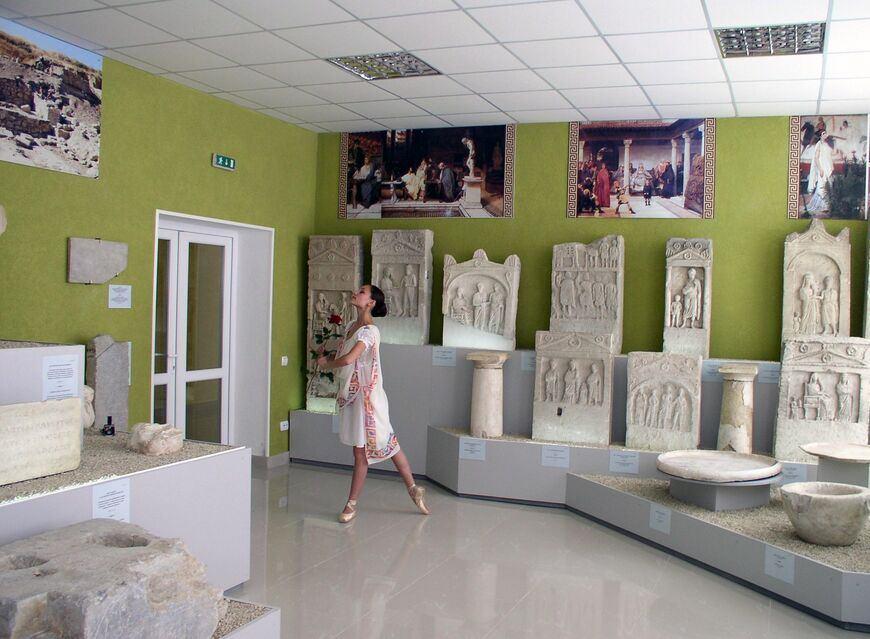
The new exhibition is organized according to the principle of open-type collections, based on materials from the collection of utilitarian stone artifacts. The exhibition’s theme follows the museum’s overall concept, which is to present all aspects of the cultural life of the Bosporan population in different historical periods. Archaeological evidence of the economic activities of the inhabitants of ancient Bosporus—museum objects from the collection of utilitarian stone artifacts—offers insight into the development of agricultural production and everyday life of the Bosporans from the 6th century BC to the 6th century AD. The trade in grain formed the basis of the Bosporans’ economic prosperity. In the 4th century BC the Bosporus was the largest North Pontic supplier of grain to Athens. Mortars and pestles were used to process grain. It was ground into flour using querns in the form of flat stone slabs with grooves, rubbing the grain with a flat stone known as a kurant. Later, the hand quern was replaced by a more advanced hand mill consisting of two millstones. The work of the farmer is illustrated by agricultural implements—querns, linings and covers of grain pits, and fragmented pithoi—which are found at the sites of ancient towns and rural settlements of the Bosporus. Winemaking was a major branch of the economy for the Bosporan Greeks. The presses (tarapans) used for wine production and elements of stone wine drains testify to viticulture and winemaking on the Bosporus. Stone feeders and drinking troughs for livestock and birds tell of animal husbandry and poultry rearing. An interesting specimen is a horse-tether (konovyaz) found during excavations by the Artesian archaeological expedition. Evidence of fishing on the Bosporus includes fishing sinker-anchors made from roughly worked stone boulders with longitudinal or transverse grooved slots, weights for trap nets, and anchor stones. Agricultural labor fed the inhabitants of the poleis and rural settlements. The main wealth of the Bosporus—bread and other agricultural products—was produced by the hands of rural inhabitants.
