Sign up
You have successfully registered, a confirmation email has been sent to the email address you provided.

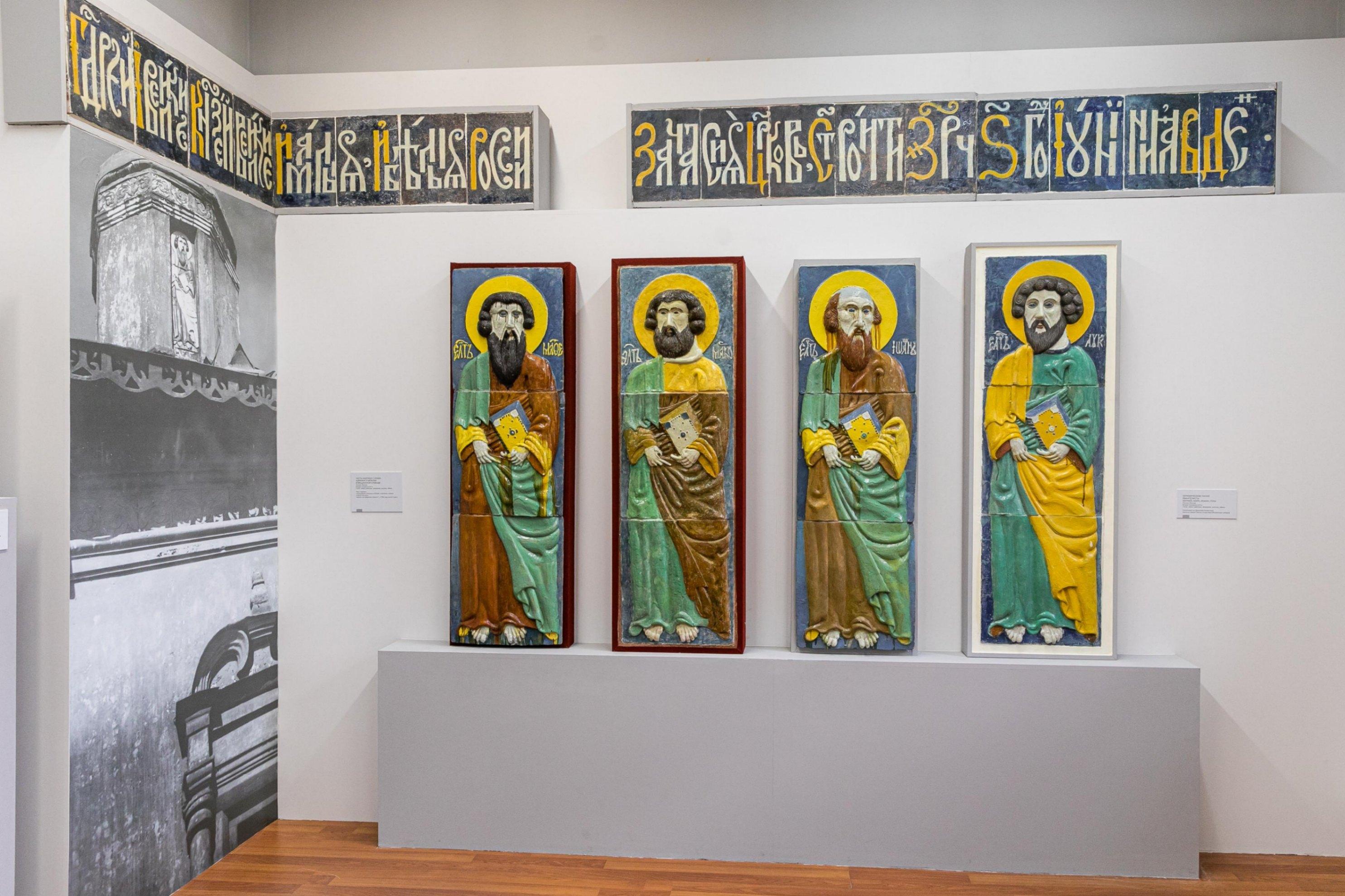
A new group of museum objects, usually kept in storage, makes it possible to trace trends, stylistic changes, and the structure and use of architectural ceramics in historic monuments. The display includes numerous ceramic items from the 17th century, rightly considered the heyday of Russian tile art. The architectural style of that era is often called Moscow uzorochye (ornamentation): bright, multicolored tiles adorned Moscow's churches and bell towers, as well as stoves, which were an important part of the Old Russian interior. For the open storage display, the United Museum‑Reserve has brought unique ceramic icons attributed to the master Stepan Ivanov (Polubes): figures of the four Evangelists from the cathedral of the Danilov Monastery and a figure of the Evangelist Matthew from the Church of St. Stephen beyond the Yauza. The 18th century is represented by painted stove tiles, whose production in Russia was established by order of Tsar Peter I. The narrative paintings on the tiles of this period depict various aspects of Russian social life. In the 19th century Russia saw the birth and rise of factory ceramic production. Highlights of the museum's collection from this period are ceramic panels produced at Matvei Kuznetsov's factory. Also notable are fireplaces and stoves of German and Finnish manufacture that decorated Moscow mansions and apartment houses in the second half of the 19th century.
