Sign up
You have successfully registered, a confirmation email has been sent to the email address you provided.

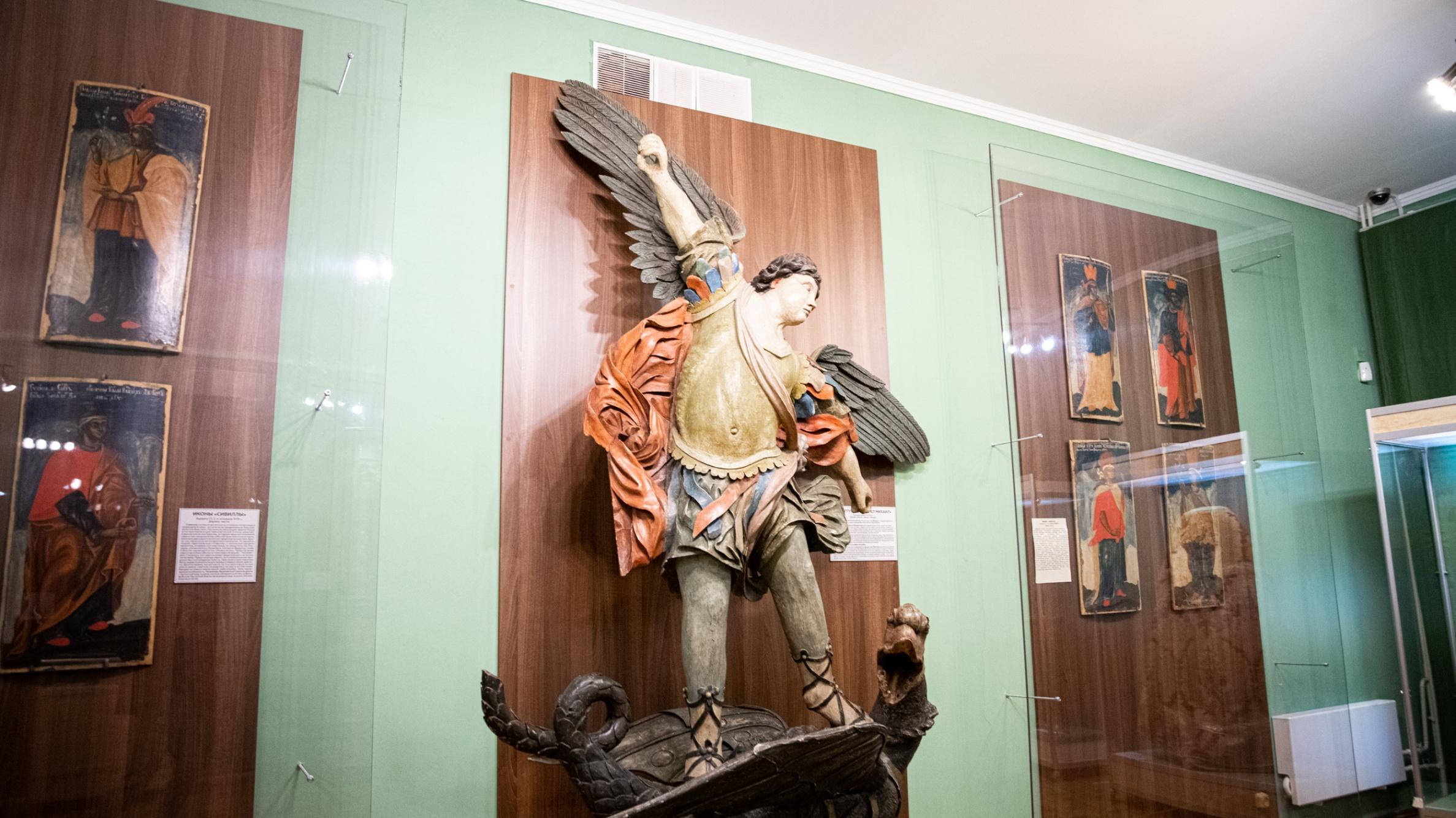
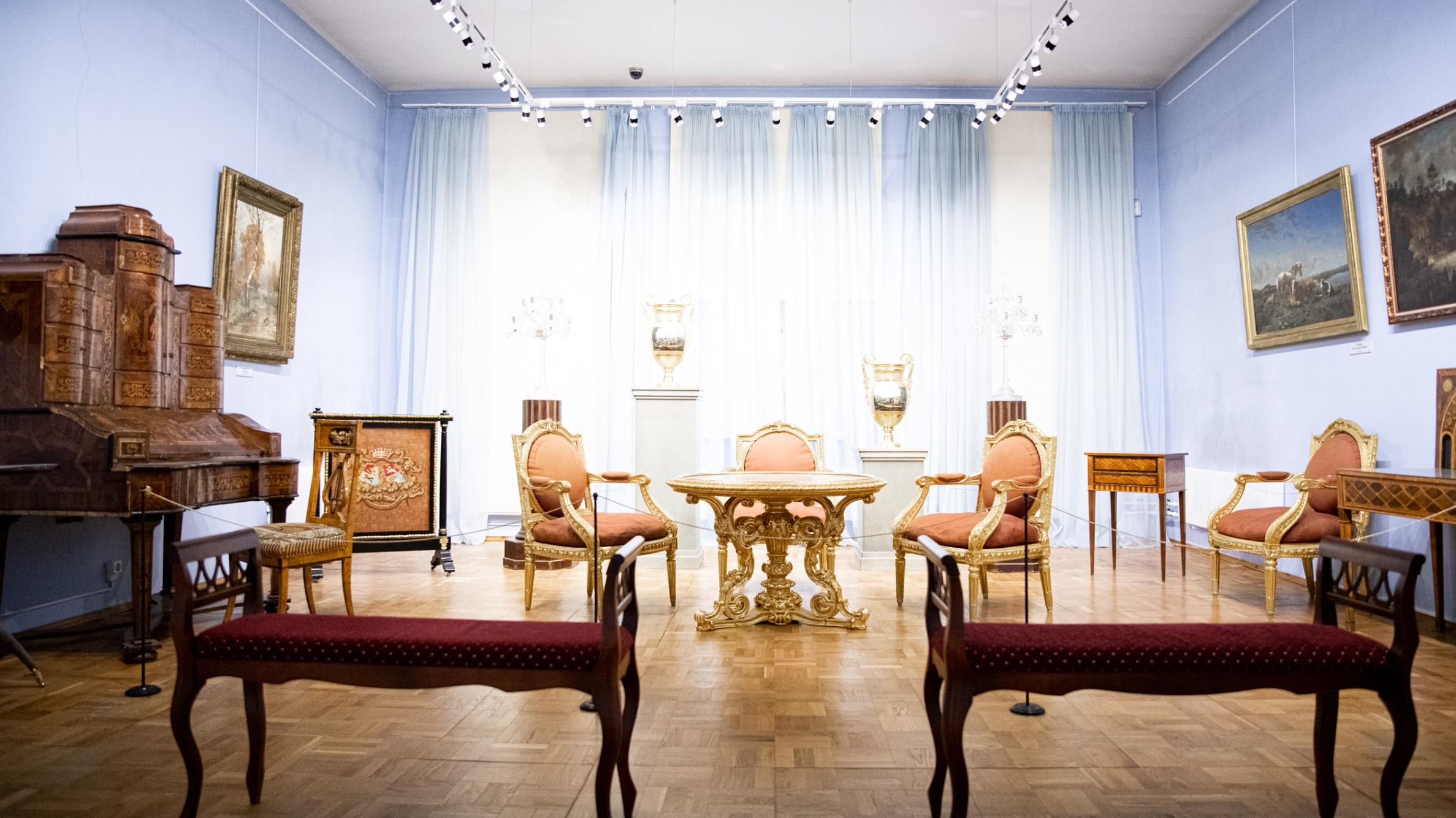
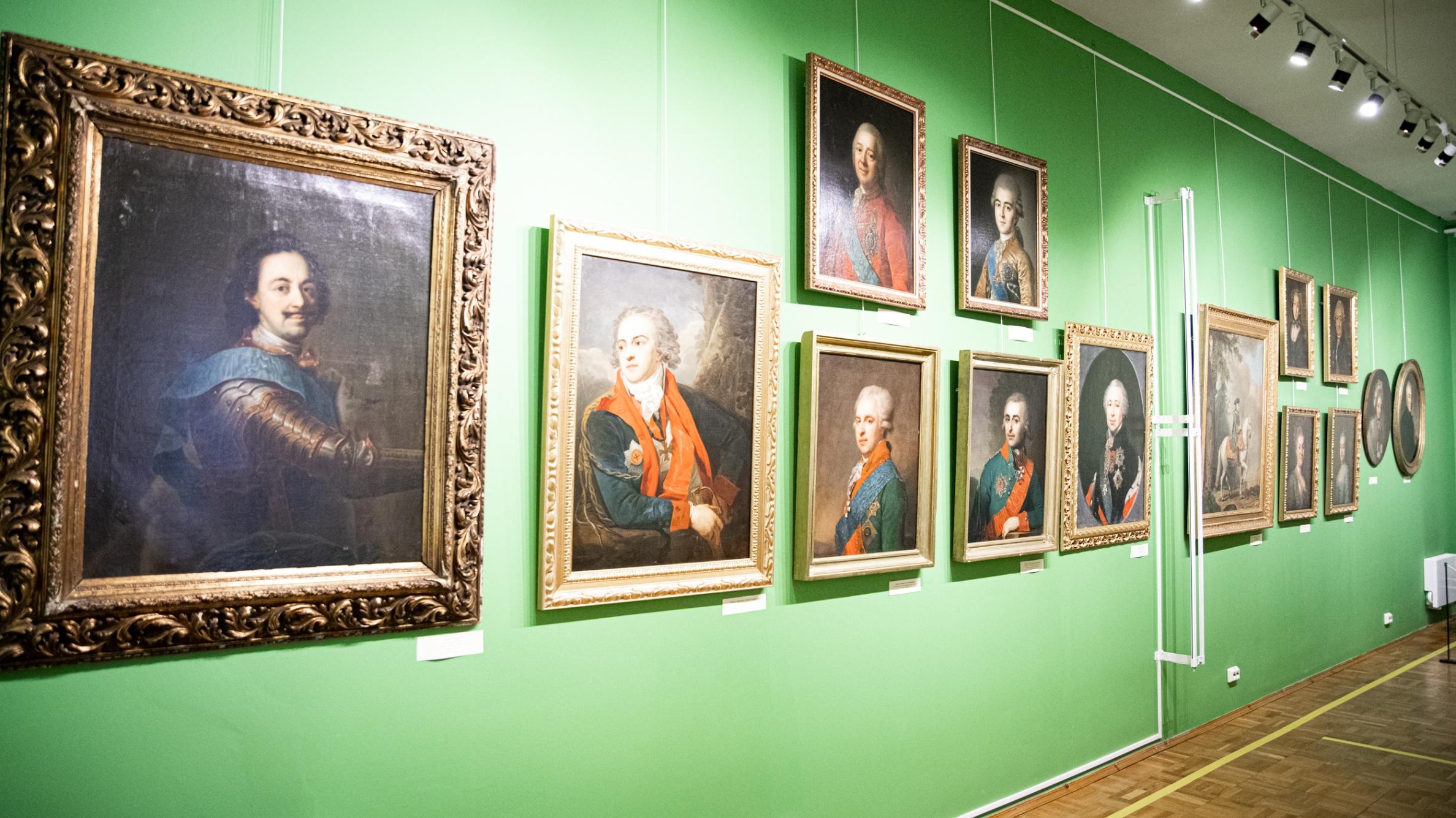
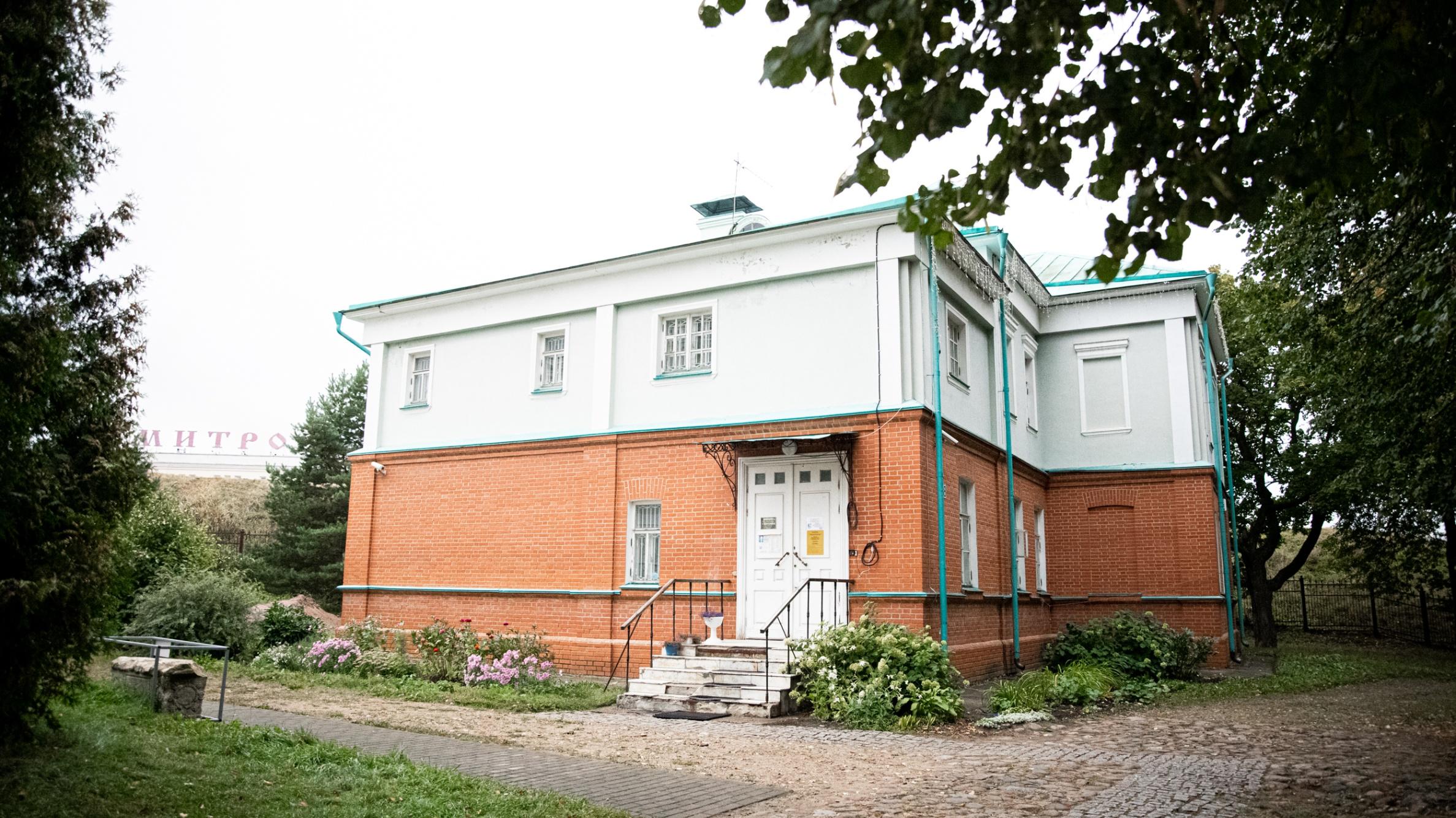
The exhibition building was erected on the grounds of the Dmitrov Kremlin by the city society between 1877 and 1888 to house military units stationed in the town. In 1897 the building became the Noble Assembly Club. Due to its poor condition, in 2002 the Noble Assembly was completely reconstructed under the direction of architect A.V. Yaganov. It is a cultural heritage site of regional significance. The first floor of the museum exhibition is devoted to ecclesiastical Orthodox art of the 12th–19th centuries: unique examples of Old Russian painting — the icons "Protection of the Most Holy Theotokos" and "Saint Paraskeva (Pyatnitsa) with scenes from her life" from the early 16th century, the "Mother of God of Gethsemane" painted in 1706 by Kirill Ulanov, liturgical objects, clerical vestments, and works of ecclesiastical sculpture. Particular attention is drawn to wooden carved icons and sculptures, including the unparalleled sculpture of the Archangel Michael fighting a serpent (18th century). The second floor houses objects of secular art, mainly acquired by the museum from former noble estates. Chief among these is a collection of glass, porcelain and faience produced in the 18th–19th centuries by leading Russian and Western European factories, and outstanding examples of Russian and Western European painting of the 18th — early 20th centuries — works by F.S. Rokotov, V.A. Borovikovsky, P.I. Neradovsky, Sh.B. Mituar and Yu.Yu. Klever.
