Sign up
You have successfully registered, a confirmation email has been sent to the email address you provided.

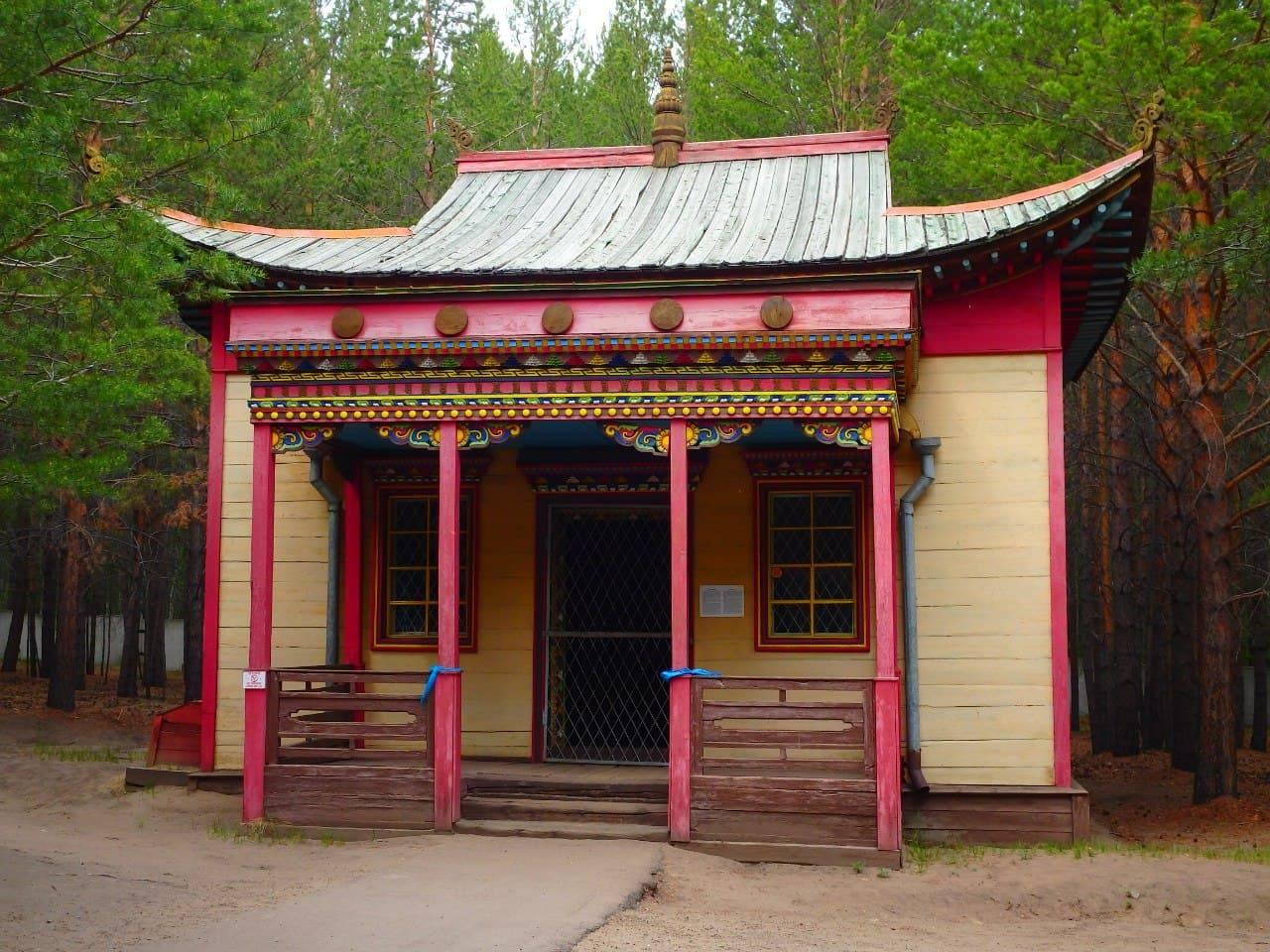
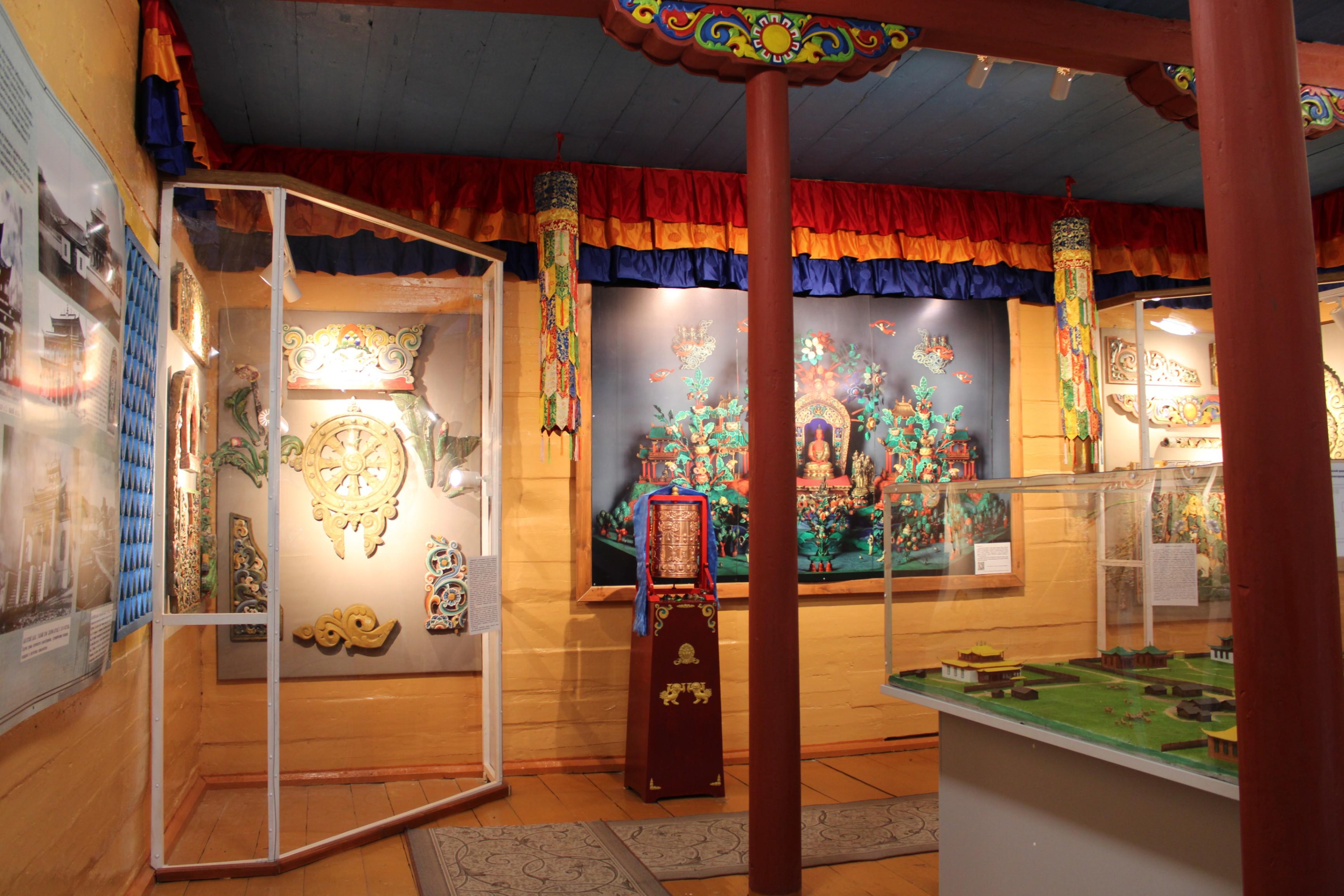
Dugan "Devazhin" was moved from the Tamchinsky (Gusinoozersky) datsan and is located in the Buryat Transbaikal complex of the Ethnographic Museum of the Peoples of Transbaikal. Dugan "Devazhin" is an example of Buryat sacred architecture of the 18th–19th centuries. Buryat sacred architecture is associated with the spread of Lamaism in Buryatia, which arrived from Mongolia at the end of the 17th century. The first premises for the Lamaist cult were ordinary felt yurts that were transported with them. With the transition to a sedentary lifestyle these were replaced by wooden buildings built by Russian carpenters. The Tamchinsky datsan was founded in 1741, and from 1809 it acquired the status of Khambyn Khuree, i.e. the residence of the Khamba Lama, the head of all Buryat Buddhists, and for more than 130 years it was a center of Buddhism and Buddhist thought. Within the Tamchinsky datsan complex the dugan "Devazhin" was one of 17 small temples and occupied a place in the western part of the courtyard, in its very corner. It was built in the 1890s to house a model of the "Sukhavati" Paradise. In the early 1970s "Devazhin" was transferred to the Ethnographic Museum of the Peoples of Transbaikal. In 2023 a re-exposition was carried out. Inside the dugan a model of the monastic complex of the Tamchinsky datsan was placed, made by the Center for Creating Creative Prototypes of the East-Siberian State Institute of Culture; photographs of the sculptural composition "Devazhin" from the collections of the State Museum of the History of Religions (St. Petersburg); a panel exhibition on the history of datsan architecture in Buryatia; and an exhibition of wooden carved elements from the Yangazhin datsan, among which particular interest is the panel "Tunshi", executed in a low-relief carving technique and illustrating an Indian tale about four animals who wisely resolved a dispute over how to reach fruit on a tall tree. Dugan "Devazhin" is a federal-level monument included in the museum complex "Ethnographic Museum of the Peoples of Transbaikal". To preserve the cultural heritage site in the open-air museum it is important to periodically assess its condition and carry out restoration and conservation. These are key preservation methods that require attention to detail and a comprehensive approach. Cultural heritage objects should be protected from environmental impacts and visitor numbers controlled to prevent negative effects. Regular maintenance of the objects is important for their preservation. The Ethnographic Museum cooperates with experts, restorers, and historians in its work on preserving cultural objects.
